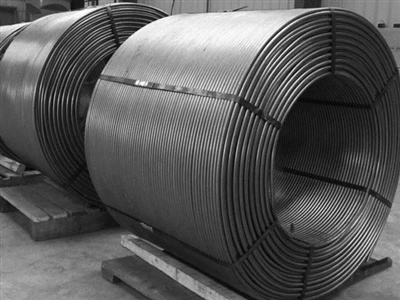
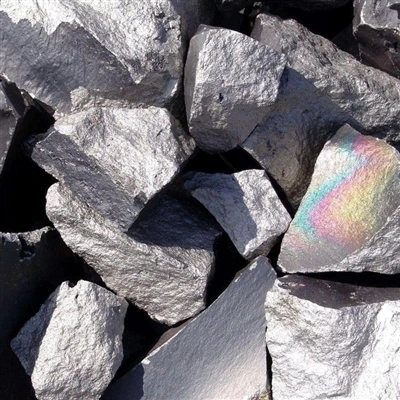
Uses of ferrosilicon
(1) Used as a deoxidizer and alloying agent in the steelmaking industry. In order to obtain steel with qualified chemical composition and ensure the quality of steel, deoxidation must be carried out in the final stage of steelmaking. The chemical affinity between silicon and oxygen is very large. Therefore, ferrosilicon is a strong deoxidizer for steelmaking for precipitation and diffusion. deoxidation. Adding a certain amount of silicon to the steel can significantly improve the strength, hardness and elasticity of the steel. Therefore, it is used in the smelting of structural steel (containing 0.40-1.75% silicon), tool steel (containing SiO.30-1.8%), spring steel ( Containing SiO (40-2.8%) and transformer silicon steel (containing 2.81-4.8% silicon), ferrosilicon is also used as an alloying agent. At the same time, improving the shape of inclusions and reducing the content of gas elements in molten steel is an effective new technology for improving steel quality, reducing costs, and saving iron. It is especially suitable for the deoxidation requirements of continuous casting molten steel. Practice has proved that ferrosilicon not only meets the deoxidation requirements of steelmaking, but also has desulfurization performance and has the advantages of large specificity and strong penetrating power.
(2) Ferrosilicon is used as an inoculant and spheroidizing agent in the cast iron industry. Cast iron is an important metal material in modern industry. It is cheaper than steel, easy to melt and smelt, and has excellent casting properties and much better seismic resistance than steel. Especially for ductile iron, its mechanical properties meet or approach the mechanical properties of steel. Adding a certain amount of ferrosilicon to cast iron can prevent the formation of carbides in the iron and promote the precipitation and spheroidization of graphite. Therefore, in the production of nodular cast iron, ferrosilicon is an important inoculant (helping to precipitate graphite) and spheroidizing agent .