Anyang Fengfan Silicon Industry Co., Ltd., founded in 2010 on December 10, formerly anyang city yu macro metallurgy refractories co., LTD., founded in 1999 on June 12, has been more than 30 years of history.
-
![CaSi Cored Wire]() CaSi Cored WireSilicon and calcium cored wire is a composite material made of silicon and calcium alloy broken into a certain size and then rolled with cold rolled low carbon steel strip.
CaSi Cored WireSilicon and calcium cored wire is a composite material made of silicon and calcium alloy broken into a certain size and then rolled with cold rolled low carbon steel strip. -
![Rare Earth Magnesium Silicon Cored Wire]() Rare Earth Magnesium Silicon Cored WireBrief introduction Rare earth magnesium silicon cored wire is a linear composite material made by mixing rare earth elements (RE), magnesium (Mg), and silicon (Si) alloy powders in specific...
Rare Earth Magnesium Silicon Cored WireBrief introduction Rare earth magnesium silicon cored wire is a linear composite material made by mixing rare earth elements (RE), magnesium (Mg), and silicon (Si) alloy powders in specific... -
![Alloys Cored Wire]() Alloys Cored WireBrief introduction Alloy cored wire has a wide range of applications in steelmaking and casting processes, including purifying molten steel, improving inclusion morphology, increasing alloy yield,...
Alloys Cored WireBrief introduction Alloy cored wire has a wide range of applications in steelmaking and casting processes, including purifying molten steel, improving inclusion morphology, increasing alloy yield,... -
![Rope Fiber Aluminum Welding Calcium Silicon Cored Wire]() Rope Fiber Aluminum Welding Calcium Silicon Cored Wire由元素Ca>28,Si>50,和铁组成的复合合金,是一种较为理想的复合脱氧剂、脱硫剂,被广泛用于优质钢、不锈钢等钢种和镍基合金、钛基合金等特殊合金钢生产当中。并适合作转炉炼钢车间用的增温剂,还可以用作铸铁的孕育剂和球墨铸铁生产中的添加剂。 由元素Ca>28,Si>50,和铁组成的复合合金,是一种较为理想的复合脱氧剂、脱硫剂,被广泛用于优质钢、不锈钢等钢种和镍基合金、钛基合金等特殊合金钢生产...
Rope Fiber Aluminum Welding Calcium Silicon Cored Wire由元素Ca>28,Si>50,和铁组成的复合合金,是一种较为理想的复合脱氧剂、脱硫剂,被广泛用于优质钢、不锈钢等钢种和镍基合金、钛基合金等特殊合金钢生产当中。并适合作转炉炼钢车间用的增温剂,还可以用作铸铁的孕育剂和球墨铸铁生产中的添加剂。 由元素Ca>28,Si>50,和铁组成的复合合金,是一种较为理想的复合脱氧剂、脱硫剂,被广泛用于优质钢、不锈钢等钢种和镍基合金、钛基合金等特殊合金钢生产... -
![High Quality Calcium Silicon Cored Wire]() High Quality Calcium Silicon Cored WireCa F e core wire is made by mixing calcium metal with a certain proportion of iron powder. The cored wire is made of a mixture of 25-35% calcium and iron powder. Mainly used as deoxidizer and...
High Quality Calcium Silicon Cored WireCa F e core wire is made by mixing calcium metal with a certain proportion of iron powder. The cored wire is made of a mixture of 25-35% calcium and iron powder. Mainly used as deoxidizer and... -
![Calcium Silicon Cored Wire]() Calcium Silicon Cored WireBrief introduction : Ca F e core wire is made by mixing calcium metal with a certain proportion of iron powder. The cored wire is made of a mixture of 25-35% calcium and iron powder. Mainly used...
Calcium Silicon Cored WireBrief introduction : Ca F e core wire is made by mixing calcium metal with a certain proportion of iron powder. The cored wire is made of a mixture of 25-35% calcium and iron powder. Mainly used... -
![High Quality CaSi Cored Wire]() High Quality CaSi Cored WireSilicon and calcium cored wire is a composite material made of silicon and calcium alloy broken into a certain size and then rolled with cold rolled low carbon steel strip.
High Quality CaSi Cored WireSilicon and calcium cored wire is a composite material made of silicon and calcium alloy broken into a certain size and then rolled with cold rolled low carbon steel strip. -
![Carbon Cored Wire]() Carbon Cored WireCarbon powder coated core wire is a linear composite alloy material made of strip steel wrapped carbon powder. Mainly used for refining and element fine tuning outside the steel furnace.
Carbon Cored WireCarbon powder coated core wire is a linear composite alloy material made of strip steel wrapped carbon powder. Mainly used for refining and element fine tuning outside the steel furnace. -
![TiFe Cored Wire]() TiFe Cored WireTiFe Cored Wire is a composite material made of Titanium iron alloy broken into a certain size and then rolled with cold rolled low carbon steel strip.
TiFe Cored WireTiFe Cored Wire is a composite material made of Titanium iron alloy broken into a certain size and then rolled with cold rolled low carbon steel strip. -
![CaFe Cored Wire]() CaFe Cored WireCaFe core wire is made by mixing calcium metal with a certain proportion of iron powder. The cored wire is made of a mixture of 25-35% calcium and iron powder.
CaFe Cored WireCaFe core wire is made by mixing calcium metal with a certain proportion of iron powder. The cored wire is made of a mixture of 25-35% calcium and iron powder. -
![Ferro Silicon Magnesium Cored Wire]() Ferro Silicon Magnesium Cored WireFerro Silicon Magnesium Cored Wire is a linear alloy made of rare earth magnesium alloy broken into a certain size and then wrapped with strip steel.
Ferro Silicon Magnesium Cored WireFerro Silicon Magnesium Cored Wire is a linear alloy made of rare earth magnesium alloy broken into a certain size and then wrapped with strip steel. -
![Calcium Silicon Cored Wire]() Calcium Silicon Cored WireSilicon calcium cored wire is a ferroalloy product made by grinding silicon calcium into powder as a core material and putting it into the cored wire.
Calcium Silicon Cored WireSilicon calcium cored wire is a ferroalloy product made by grinding silicon calcium into powder as a core material and putting it into the cored wire.


Why choose us?
Rich Experience
Providing technical support, troubleshooting, and maintenance services.
Production Market
The products are exported to domestic countries such as sichuan panzhihua iron and steel, shandong laigang yongfeng iron and steel, hebei jingye group, and foreign countries such as South Korea, Japan, Russia, Iran and so on.
Our Service
We will patiently introduce our company's products to customers, including product specifications, functions, performance, etc.
One-stop Solution
We will patiently answer all kinds of problems encountered by customers during the journey, as well as solve problems encountered by customers in the later period of use .
What is Cored Wire?
The cored wire is made by wrapping the alloy powder with a strip-shaped steel strip. According to the difference of alloy powder, it can be divided into: silicon calcium core wire, silicon manganese calcium wire, silicon calcium barium wire, barium aluminum wire, aluminum calcium wire, calcium iron wire, pure calcium wire, etc. The winding looks like a coil. In the field of ferroalloys, powder cored wire is usually called cored wire, which is mainly manifested in three aspects: inoculation, refining in furnace and alloying of special elements.

The alloy cored wire is a composite material. The alloy core wire is used to crush various additives (deoxidizer, desulfurizer, modifier, alloy, etc.) to be added into molten steel or molten iron into a certain particle size, and then use cold-rolled low-carbon steel strip to package it as A composite material of any length.
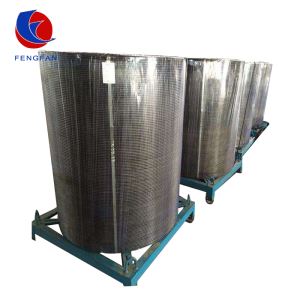
The core wire consists of a steel cladding coated with alloy powder. It is wound on a reel and produces a coil weight of 100-3000 kg. The diameter of the wire is 3-18mm.
The core wire is compact and the powder material is evenly mixed. The weight of the powder can be calculated by the unit length (meter).
Cored wire advantages
The core wire injection technology has replaced the injection method of single shot refractory gun powder and proved to be an indispensable method in the secondary metallurgical process.
High speed continuous
Meet the increasing requirements for chemical elements in casting
Processing time is shorter and more accurate
Very good repeatability.
What is cored wire used for
The cored wire is widely used in steelmaking technology.
- It is beneficial to adjust and control the content of easily oxidizable elements and trace elements, and can greatly increase the alloy yield, reduce the smelting cost, shorten the smelting time, and accurately control the composition.
- It can play a role in making the molten steel pure and partial change the nature and shape of the inclusions, improve the quality of the molten steel, and improve the casting state.
In the right applications, metal-cored wire is among the solutions that can provide productivity and time-saving benefits. There are some key steps that can help determine if metal-cored wire is the right choice.
Behind the technology
As with any type of filler metal, metal-cored wire has its own specific characteristics, benefits, limitations and best-suited applications. Because metal-cored wire is a hollow metal sheath filled with metallic powders, alloys and arc stabilizers, it can create distinct results. These include lowering oxidation, providing higher impact strengths and reducing silicon depositions. These characteristics also make metal-cored wire especially suitable for welding through mill scale.
When welding with metal-cored wire, the spray transfer process is used. This process creates tiny filler metal droplets that deposit in the weld puddle and generate little to no spatter. Because the current travels through the outside metal sheath, the wire produces a broad, cone-shaped arc. This results in a wider penetration profile compared to the more finger-like penetration of solid wire. This arc shape also creates a wide, consistent bead profile that bridges gaps easily and accurately without burn-through.
The construction of metal-cored wire also allows for greater travel speeds and deposition rates, and helps minimize porosity and undercut in the final weld. All of these factors can increase productivity and allow welding operators to weld more efficiently, deposit more weld metal, reduce quality issues and spend less time cleaning the weld.
Metal-cored wire is suitable for flat, horizontal, in some cases vertical down welding using a standard constant voltage power source. Vertical up welding is also possible with a power source that provides pulsing capabilities, though it will generally be slower using metal-cored wire compared to flux-cored wire. Metal-cored wire is capable of single or multi-pass welding, and requires high argon shielding gas mixtures (a minimum of 75 percent).
Industries such as heavy & mining equipment manufacturing, trailer fabrication, beam & lintel manufacturing, automotive exhaust, chassis and wheel manufacturing, and food and petrochemical fabrication all have welding applications in which metal-cored wire excels. This is due partly to the fact that the wires can be alloyed for most types of steel, from mild and stainless to low alloy. Many of these industries also frequently weld 6mm and thicker material, another application where metal-cored wire offers solid productivity solutions, specifically due to its gap-bridging capabilities.
One consideration to keep in mind is that metal-cored wire, on average, costs more per pound than other types of filler metals. However, it can boost productivity that offset the initial cost.
What are the benefits?
While metal-cored wire typically has faster travel speeds and higher deposition rates than other types of wire (especially solid wire), the technology can offer its greatest productivity benefits in the pre- and post-weld phases. In some welding operations, using metal-cored wire eliminates certain pre and post-weld activities such as grinding, sand blasting, applying anti spatter and re-work. This allows the time spent on those tasks to be allocated elsewhere, in ways that can improve the overall productivity of the operation.
Since metal-cored wire tends to create little to no spatter and minimizes defects such as undercutting or lack of fusion, post-weld activities such as grinding or chipping spatter usually aren't necessary, which saves labour time and money. Additionally, reducing the necessary post-weld activity helps increase the flow of completed parts to other stages of production, such as painting or coating, to improve overall productivity.
Cored wire is used for steelmaking.It can purify the liquid steel,change the impurities shapes,improve the castability of iron and steel,improve the using performance of steel,and significantly enhance the ferroalloy yield rate,reduce alloy consumption as well as the cost of steelmaking in consequence to get remarkable economic benefits.
Features:
1.The metal powder is firm in the steel belt,no hollow.And the wire is seamless,will not be broken.
2.Being propitious to adjust and control the active metal and the content of microelement.
3.Keep stable of the alloy performance function, reducing steelmaking cost.
4.Changing the inclusion form to improve the mechanical property.
5.It is used by injection way.Facilitate the operation and reduce the operation cost.

CaSi Cored Wire : Steelmaking Deoxidizing and Desulfurizing
Silicon calcium cored wire main function is as deoxidizing and desulfurizing agent in steelmaking process.The main raw material of silicon calcium cored wire is silicon calcium powder, which is used as the core material, and the outer skin is steel skin.
Silicon calcium cored wire is made by mixing calcium metal and iron powder in a certain proportion.In detail, It is composed of 25-35% calcium particles and the rest of the mixture of iron powder as the core material, made of strip steel as the cover.
Silicon calcium cored wire using core-wrapping technology: Through the wire feeder, made a specified number of cored wire pass through the slag layer at a certain speed and reach the bottom of the ladle filled with molten steel, as the core of the cored wire continues to melt there, the additives wrapped in it will be continuously released into the molten steel, the oxidation and burning of the alloying elements by the air and the slag can be avoided; and can also made the additive or its vapor and treated solution have large contact area and long action time.
The alloy cored wire used for steelmaking can purify molten steel, change the shape of inclusions, improve the castability and mechanical properties of molten steel, and significantly increase the yield of ferroalloys, reduce the cost of steelmaking, and have less environmental pollution, the economic effect is remarkable.
Carbon cored wire is an innovative product designed to meet the specific needs of modern industrial applications. The product is produced using advanced technology and high-quality materials, making it ideal for use in the most demanding environments.
Carbon powder coated core wire is a linear composite alloy material made of strip steel wrapped carbon powder. Mainly used for refining and element fine tuning outside the steel furnace.
The carbon core wire is mainly used outside the furnace (ladle or hot metal ladle, in front of the furnace, holding furnace, tundish, crystallizer, medium cast pipe and large iron mold) to deoxidize, desulfurize, Microalloy, fine tune the composition, modify the inclusions, and spheroidize and inoculate the molten steel or hot metal.
Features and usage:
* Carbon cored wire for medium and low carbon steel ladle feed line carburizing.
* The carbon cored wire can feed the carbon cored wire directly into the steel, which avoids the mixing of carbon powder with steel slag and makes the carbonization unstable.
* The use of carbon cored wire for carburizing ladle can ensure the stability of carburizing and keep the carbon content within the range of 0.019%.
* The reduction of oxidation property of molten steel can effectively improve the yield of carburizer, and the uniformity of end point component can guarantee the various components of molten steel after the steel is accurately adjusted.
Core - Coated Wire - The Role of Refining and Application
The effective way to refine outside the furnace is to use the core wire to process the metal in the ladle. With the aid of the clip feeder, the core wire can add agents, deoxidizers and alloying elements into the liquid metal, which can reduce energy and material costs, increase the absorption of alloying elements in smelting and reduce their dispersion, and remove sulfur and non-metallic inclusions in the metal liquid, Improve the quality of metal products.
At this point, it can also improve the fluidity and castability of molten steel on the continuous casting device and in the steel mold, reduce spatter into the atmosphere, and reduce equipment costs and production consumption. The ladle skin of the core wire protects the active agent from the effects of atmosphere and moisture during preservation and transportation, prevents its oxidation as it passes through the slag layer, and ensures the required rigidity for insertion into the melt at a given depth.
The contact time between the agent and molten steel and the speed of their interaction can be adjusted by changing the quantitative relationship between the velocity, diameter, thickness of prepuce and each element of the packing.
Cored wire is one of the smelting industry to use more means, through the molten steel to feed core-coated wire to improve the quality of molten steel, the following for everyone to introduce the role of high calcium core-coated wire.
(1) The high-calcium cored wire was used for calcium treatment in the production of low-carbon and low-silicon steel. Compared with the iron-calcium wire, the average temperature decreased by 2.6℃, the silicon increased by 0.001%, the feeding time was shortened by 1min, and the yield was increased by 2.29 times.
(2) The feeding amount of iron-calcium line is 3 times that of high-calcium line.
If reduced to the same calcium content W (ca) division for comparison, the iron calcium line feeding is at most 2.45 times that of the high calcium line.
(3) High calcium cored wire is adopted to treat the molten steel, and the level of inclusions in the steel is equivalent to that of the feed iron and calcium wire, which can meet the product requirements.
Our Factory
Anyang Fengfan Silicon Industry Co., Ltd. is located in anyang, one of the seven ancient capitals of China, close to beijing-hongkong-macao expressway and nanlin expressway, with convenient traffic conditions, superior natural environment and abundant mineral resources, which provide advantaged conditions for the development of the enterprise. The company's leading products are: cored wire, silica-aluminum-barium calcium deoxidized alloy series,silicon metal, metal silicon powder, ferrosilicon ball, silicon carbon ball and other alloy pressure ball, silicon powder, rare earth ferrosilicon magnesium alloy, spheroidizing agent, etc. The products sell well in many large iron and steel enterprises and foundry enterprises at home and abroad. Anyang metallurgical material production base is one of the main manufacturers.

FAQ
We're well-known as one of the leading cored wires manufacturers and suppliers in China for 10 years. Our factory offers high quality cored wires made in China with competitive price. Welcome to place an order.
flux core 035 wire, metal core welding wire, dual shield stainless wire