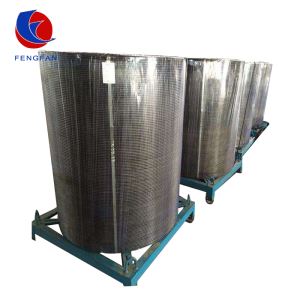
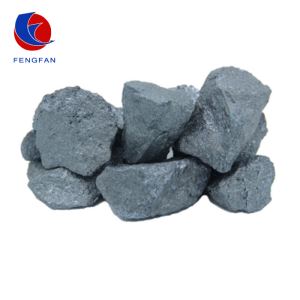
Anyang Fengfan Silicon Industry Co., Ltd., founded in 2010 on December 10, formerly anyang city yu macro metallurgy refractories co., LTD., founded in 1999 on June 12, has been more than 30 years of history.
-
![Silicon Metal 441]() Silicon Metal 441Silicon Metal 441 is the raw material for the production of ultrapure silicon in the electronic industry.
Silicon Metal 441Silicon Metal 441 is the raw material for the production of ultrapure silicon in the electronic industry. -
![Ferrosilicon Nitride]() Ferrosilicon NitrideBrief introduction SI3N4 is the main component of ferrosilicon nitride, accompanied by free iron, ferrosilicon nitride and a small amount of other components. Ferrosilicon nitride for fire...
Ferrosilicon NitrideBrief introduction SI3N4 is the main component of ferrosilicon nitride, accompanied by free iron, ferrosilicon nitride and a small amount of other components. Ferrosilicon nitride for fire... -
![High-quality Low-cost Silicon Nitride]() High-quality Low-cost Silicon NitrideBrief introduction In the vast field of materials science, silicon nitride (chemical formula Si ∝ N ₄) is like a brilliant star, with its excellent comprehensive performance, becoming an...
High-quality Low-cost Silicon NitrideBrief introduction In the vast field of materials science, silicon nitride (chemical formula Si ∝ N ₄) is like a brilliant star, with its excellent comprehensive performance, becoming an... -
![China Silicon Powder]() China Silicon PowderBrief introduction Silicon powder is a micron- or nano-sized powder produced by crushing, grinding, or vapor deposition of high-purity silicon. Its chemical formula is Si, and it appears as a...
China Silicon PowderBrief introduction Silicon powder is a micron- or nano-sized powder produced by crushing, grinding, or vapor deposition of high-purity silicon. Its chemical formula is Si, and it appears as a... -
![Silicon Metal 3303/2202/1101]() Silicon Metal 3303/2202/1101Metallurgical Silicon (also known as Industrial Silicon) is a key industrial raw material with a silicon content of 98% or higher, widely used in aluminum alloys, silicones, polysilicon, and other...
Silicon Metal 3303/2202/1101Metallurgical Silicon (also known as Industrial Silicon) is a key industrial raw material with a silicon content of 98% or higher, widely used in aluminum alloys, silicones, polysilicon, and other... -
![Magnesium Ingots]() Magnesium IngotsBrief introduction As the primary form of high-purity metallic magnesium, magnesium ingots are an indispensable foundational material in modern industry. This silvery-white, lightweight metal...
Magnesium IngotsBrief introduction As the primary form of high-purity metallic magnesium, magnesium ingots are an indispensable foundational material in modern industry. This silvery-white, lightweight metal... -
![Ferro Calcium Silicon Exclusive For Export]() Ferro Calcium Silicon Exclusive For ExportBrief introduction Ferro Calcium Silicon (FeCaSi) is a ternary alloy composed of iron (Fe), calcium (Ca), and silicon (Si). It is widely used in the steelmaking and casting industries due to its...
Ferro Calcium Silicon Exclusive For ExportBrief introduction Ferro Calcium Silicon (FeCaSi) is a ternary alloy composed of iron (Fe), calcium (Ca), and silicon (Si). It is widely used in the steelmaking and casting industries due to its... -
![High Carbon Ferrosilicon]() High Carbon FerrosiliconBrief introduction High carbon ferrosilicon, a name that might sound unfamiliar, is an indispensable "unsung hero" in the steel industry. This silvery-gray alloy, primarily composed of...
High Carbon FerrosiliconBrief introduction High carbon ferrosilicon, a name that might sound unfamiliar, is an indispensable "unsung hero" in the steel industry. This silvery-gray alloy, primarily composed of... -
![2025 Silicon Manganese 6014]() 2025 Silicon Manganese 6014Brief introduction Silicon manganese 6014, although the name may sound unfamiliar, is an indispensable and important role in the modern steel industry. It is an alloy composed of elements such as...
2025 Silicon Manganese 6014Brief introduction Silicon manganese 6014, although the name may sound unfamiliar, is an indispensable and important role in the modern steel industry. It is an alloy composed of elements such as... -
![Manufacturing Sales Ferro Silicon 75%]() Manufacturing Sales Ferro Silicon 75%Brief introduction The specific composition content range of Ferro Silicon 75 is Si ≥ 75%, Al ≥ 1.5%, Ca ≤ 0.06%, Mg ≤ 0.05%, Mn ≤ 0.25%, P ≤ 0.04%, Al + Si ≤ 1.7%, Ti ≤...
Manufacturing Sales Ferro Silicon 75%Brief introduction The specific composition content range of Ferro Silicon 75 is Si ≥ 75%, Al ≥ 1.5%, Ca ≤ 0.06%, Mg ≤ 0.05%, Mn ≤ 0.25%, P ≤ 0.04%, Al + Si ≤ 1.7%, Ti ≤... -
![China Supply Silicon Barium Metal]() China Supply Silicon Barium MetalBrief introduction Silicon Barium is a ferroalloy product that contains silicon and barium elements. Its manufacturing process shares similarities with silicon production. To enhance the barium...
China Supply Silicon Barium MetalBrief introduction Silicon Barium is a ferroalloy product that contains silicon and barium elements. Its manufacturing process shares similarities with silicon production. To enhance the barium... -
![Manufacturer Price Silicon Barium]() Manufacturer Price Silicon Barium1 Products Description Silicon Barium is a kind of Barium containing Silicon elements and elements of ferroalloy products, its production method has similarities with Silicon, Silicon Barium in...
Manufacturer Price Silicon Barium1 Products Description Silicon Barium is a kind of Barium containing Silicon elements and elements of ferroalloy products, its production method has similarities with Silicon, Silicon Barium in...


Why choose us?
Rich Experience
Providing technical support, troubleshooting, and maintenance services.
Production Market
The products are exported to domestic countries such as sichuan panzhihua iron and steel, shandong laigang yongfeng iron and steel, hebei jingye group, and foreign countries such as South Korea, Japan, Russia, Iran and so on.
Our Service
We will patiently introduce our company's products to customers, including product specifications, functions, performance, etc.
One-stop Solution
We will patiently answer all kinds of problems encountered by customers during the journey, as well as solve problems encountered by customers in the later period of use .
What is Silicon Metal Used For?
What is silicon metal?
Silicon metal is a gray and shiny semiconductor metal,also known as crystalline silicon or industrial silicon, is mainly used as an additive for non-ferrous alloys which smelted from quartz and coke in an electric furnace.
The classification of metallic silicon is usually classified according to the content of iron, aluminum and calcium, silicon metal can be divided into different grades such as silicon metal 553, 441, 411, 3303, 2202, and 1101.
What is silicon metal used for?
Silicon metal is mainly used for aluminum ingot foundry
Silicon metal can improve the already useful properties of aluminum such as castability, hardness and strength. Adding silicon metal to aluminium alloys makes them strong and light.
So, they are increasingly used in the automotive industry. Used to replace heavier cast iron parts. Automotive parts such as engine blocks and tire rims are the most common cast aluminum silicon parts.
Silicon metal is mainly used for solar industry and electronics industry.
Silicon metal can also be used as essential material in the solar and electronics industries. For examples, it can be used in the manufacture of solar panels, semi-conductors and silicon chips.
Silicon metal is mainly used for Production of silicone rubber, silicone resin, silicone oil, etc.
The above is a few details about the use of silicon metal by Hensfate Metal. I hope it will be helpful to you. We are a silicon metal manufacturer. We can customize various particle sizes according to your requirements. Welcome to consult at any time.
The Application of Silicone Metal
Alloying Agent :
One of the primary uses of silicon metal in metallurgy is as an alloying agent. When added to iron and steel, it enhances their strength, hardness, and resistance to corrosion. The resulting alloys, commonly known as silicon steels or silumin, find extensive applications in the manufacturing of electrical transformers, motors, and other industrial equipment. The addition of silicon also improves the magnetic properties of these alloys, making them ideal for electrical applications.
Deoxidizer :
Silicon metal is highly effective as a deoxidizing agent in metallurgical processes. When added to molten metals such as aluminum, copper, or steel, it reacts with oxygen to form silicon dioxide (SiO2). This reaction helps eliminate impurities by causing the silicon dioxide to float to the surface as slag, which can be easily removed. By removing oxygen from the molten metal, silicon metal prevents the formation of oxides that can negatively impact the quality of the final product. Deoxidation with silicon metal ensures the production of high-quality metals with improved mechanical properties.
Desulfurization Agent :
In the production of iron and steel, silicon metal is utilized as a desulfurizing agent. Sulfur is a common impurity in metal ores, and its presence can adversely affect the mechanical properties and workability of the final product. When silicon metal is added to molten metal, it reacts with sulfur to form silicon sulfide (SiS). The silicon sulfide forms slag, which can be easily separated from the metal. Desulfurization with silicon metal is crucial for producing high-quality steel and iron with reduced sulfur content, resulting in improved strength and ductility.
Nodularizer :
Silicone metal is employed as a nodularizing agent in the production of ductile cast iron. Ductile cast iron, also known as nodular or spheroidal graphite iron, exhibits superior mechanical properties compared to traditional cast iron. When silicon is added to molten iron, it promotes the formation of graphite nodules instead of the usual graphite flakes. These nodules enhance the ductility and toughness of the cast iron, making it more malleable and resistant to cracking. The nodularization process, facilitated by silicon metal, is essential for applications requiring cast iron with exceptional strength, impact resistance, and machinability.
Semiconductor Industry :
While not directly related to metallurgy, it is worth mentioning that silicon metal plays a crucial role in the semiconductor industry. Silicon is the fundamental material used in the production of high-purity silicon wafers, which serve as the base for most electronic devices, including computer chips and solar cells. The exceptional electrical properties of silicon, combined with its abundance and ease of processing, make it the preferred material for semiconductor manufacturing. The demand for silicon metal in the semiconductor industry continues to grow as advancements in technology require increasingly sophisticated electronic devices.
Silicon metal powder is made of silicon metal by grinding. High quality silicon metal powder has a good particle size and uniform effect. Why do we need silicon metal powder? In fact, there are many advantages and effects for silicon metal powder compared with silicon metal natural blocks. According to silicon metal powder properties, the silicon metal powder advantages as following:
► High temperature resistance
Silicon metal powder can be used in the production of refractory materials and powder metallurgy industry. The silicon metal powder can improve the high temperature resistance of the product during smelting, which is usually required by the steel industry.
► High durable
The silicon metal powder can improve the wear resistance of the castings in the production of some wear-resistant castings. The silicon metal powder uses can effectively improve the service life and quality of the castings.
► Deoxidation
The silicon metal powder contains a certain amount of silicon which can affinity-produce oxygen to produce silica, and reduces the reaction ability during smelting while deoxidizing. It make sure deoxidation much safer!
► Silicone industry
The silicon metal powder can participate in the synthesis of silicone polymers. And we can produce high quality silicon monomer, silicone rubber, silicone oil and other products through silicon metal powder.
► Metallurgical foundry industry
In the metallurgical foundry industry, silicon metal powder has also been widely used. In the steel making process, silicon metal powder can be used as a deoxidizer, alloy additive and so on. And the effect is very significant. Meanwhile, the silicon metal powder can also be used in the production of castings as inoculant uses.

The classification of silicon metal is usually based on the content of iron, aluminum and calcium, the three main impurities contained in the composition of silicon metal.According to the content of iron, aluminum and calcium in metal silicon, metal silicon can be divided into 553, 441, 411, 421, 3303, 3305, 2202, 2502, 1501, 1101 and other different grades.
Industrially, silicon metal is usually made by reducing silicon dioxide from carbon in an electric furnace.Chemical reaction equation: SiO2 + 2C Si + 2CO so made of silicon purity for 97~98%, called silicon metal.After melting it again recrystallize, remove impurity with acid, get purity of 99.7~99.8% silicon metal.
The silicon metal is mainly composed of silicon, so it has similar properties to silicon.Silicon has two allotropes: Amorphous silicon and crystalline silicon.Amorphous silicon is a gray-black powder that is actually a microcrystal.Crystal silicon has the crystal structure and semiconductor properties of diamond, melting point 1410℃, boiling point 2355℃, Mohs hardness 7, brittle.Amorphous silicides are active and can burn violently in oxygen.It reacts with non-metals such as halogens, nitrogen and carbon at high temperatures, and can also react with metals such as magnesium, calcium and iron to produce silicides.Amorphous silicon is almost insoluble in all inorganic and organic acids, including hydrofluoric acid, but soluble in the mixture of nitric acid and hydrofluoric acid.The concentrated sodium hydroxide solution dissolves amorphous silicon and gives off hydrogen gas.Crystal silicon is less reactive and does not combine with oxygen even at high temperatures. It is also insoluble in either inorganic or organic acids, but soluble in a mixture of nitric and hydrofluoric acids as well as in concentrated sodium hydroxide solutions.
Where Does The Silicon Metal Come From?
The production of metal silicon is based on carbon heat, that is, the method of smelting in the mineral heat furnace with silica and carbon reducing agent. The silicon purity of this production is 97% to 98%, so that the silicon can generally be used for metallurgical purposes.
If a higher grade of silicon is to be obtained, it needs to be refined to remove impurities and obtain metal siliconwith a purity of 99.7% to 99.8%.
The smelting of metal silicon with quartz sand as raw material, including quartz sand block, preparation furnace material and mineral heat furnace smelting several steps. Generally speaking, high-quality quartz sand will be directly used in the production of high-grade quartz glass products, and even processed into gemstone grade such as crystal, tourmaline and other products. Slightly worse grade but large reserves, slightly better mining conditions, the surrounding electricity is cheaper to produce metal silicon.
At present, China's production of metal silicon carbon thermal method of the production process route: the common use of silica as raw material, petcoke, charcoal, charcoal, low-gray coal, such as reducing agent, in the mineral thermal furnace high temperature smelting, from silicon to restore the metal silicon, which is no slag buried arc high temperature smelting process. Therefore, although metal silicon is extracted from silica, not all silica is suitable for making metal silicon.
The common sand we see every day is not the real raw material for metal silicon, but the quartz sand used in the industrial production described above, and has undergone a multi-step reaction to complete the metamorphosis from sand to metal silicon.
The silicon metal component is mainly silicon and thus silicon metal properties is similar to silicon. Silicon has two allotropes of amorphous silicon and crystalline silicon. Amorphous silicon is a gray-black powder and is actually a microcrystal. Crystalline silicon has the crystal structure and semiconducting properties of diamond, melting point 1410 ℃, boiling point 2355℃, Mohs hardness 7, brittleness. Amorphous silicon is chemically active and can burn intensely in oxygen. It reacts with non-metals such as halogen, nitrogen and carbon at high temperatures, and also reacts with metals such as magnesium, calcium and iron to form silicides. Amorphous silicon is hardly soluble in all inorganic and organic acids including hydrofluoric acid, but is soluble in a mixed acid of nitric acid and hydrofluoric acid. The concentrated sodium hydroxide solution dissolves amorphous silicon and releases hydrogen. Crystalline silicon is relatively inactive, does not combine with oxygen even at high temperatures, it is not soluble in any inorganic acid and organic acid, but is soluble in mixed acid of nitric acid and hydrofluoric acid and concentrated sodium hydroxide solution.
Silicon is widely used for smelting into ferrosilicon alloys as alloying elements in the steel industry, and as a reducing agent in many metal smelting. Silicon metal properties is make it also a good component in aluminum alloys, and most cast aluminum alloys contain silicon. Silicon is the raw material of ultra-pure silicon in the electronics industry. The ultra-pure semiconductor monocrystalline silicon electronic device has the advantages of small size, light weight, good reliability and long life, because of silicon metal properties.
From a global perspective, the consumption of silicon for metallurgy is more than that for chemical silicon. However, with the continuous development of science and technology, chemical silicon is widely used in the fields of silicone and semiconductor production, and is widely used in the production of organic Silicon monomer and polymer silicone oil, silicone rubber, silicone building anti-corrosion, waterproofing agent, etc., they have high temperature resistance, electrical insulation, radiation resistance, waterproof and other unique silicon metal properties .
Used in electrical, aerospace, machinery, chemical, pharmaceutical, defense, construction and other departments. More than 95% of the electronic components that are the core of integrated circuits are made of semiconductor silicon, which is the backbone of the modern information industry. The fiber in the fiber optic cable, which is widely used in the "information superhighway", is also produced from silicon metal. The consumption of chemical silicon in the United States and the European Union has accounted for more than half of total silicon metal consumption. Chemical silicon is widely used as a high-tech field and an important basic industry, and its consumption tends to grow steadily.
Our Factory
Anyang Fengfan Silicon Industry Co., Ltd. is located in anyang, one of the seven ancient capitals of China, close to beijing-hongkong-macao expressway and nanlin expressway, with convenient traffic conditions, superior natural environment and abundant mineral resources, which provide advantaged conditions for the development of the enterprise. The company's leading products are: cored wire, silica-aluminum-barium calcium deoxidized alloy series,silicon metal, metal silicon powder, ferrosilicon ball, silicon carbon ball and other alloy pressure ball, silicon powder, rare earth ferrosilicon magnesium alloy, spheroidizing agent, etc. The products sell well in many large iron and steel enterprises and foundry enterprises at home and abroad. Anyang metallurgical material production base is one of the main manufacturers.

We're well-known as one of the leading silicon metal manufacturers and suppliers in China for 10 years. Our factory offers high quality silicon metal made in China with competitive price. Welcome to place an order.
silicon bronze aluminum, silicon bronze sheet, silicon bronze on aluminum