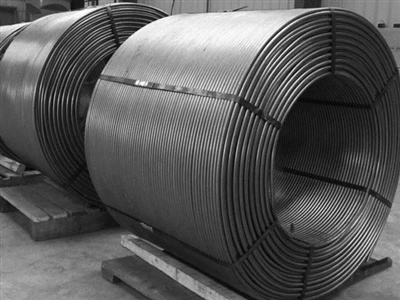
The Importance of Cored Wire
Cored wire plays a critical role in industries such as metallurgy, casting, and welding. Its significance is primarily reflected in the following aspects:
1. Precise Composition Control
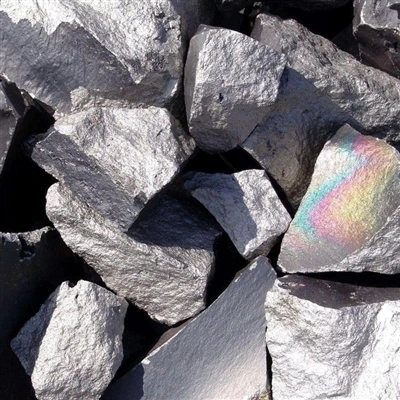
Alloy Element Addition: Cored wire is a composite material consisting of an outer metal or alloy strip and an inner core of specific powders (e.g., calcium, magnesium, rare earth, silicon-calcium alloy). By feeding it into molten steel or metal, precise composition adjustment can be achieved, improving material properties (e.g., deoxidation, desulfurization, alloying).
Uniformity: Cored wire prevents segregation caused by traditional feeding methods, ensuring even distribution of alloying elements in the melt.
2. Improved Reaction Efficiency and Yield
Deep Reaction: Cored wire delivers reactive elements (e.g., calcium, magnesium) directly into the molten pool, minimizing oxidation and slag reaction losses, significantly increasing element yield (e.g., calcium recovery can rise from 10% to over 30%).
Reduced Waste: Compared to direct powder or lump alloy addition, the encapsulated structure of cored wire reduces volatilization and oxidation losses.
3. Enhanced Material Properties
Melt Purification: Deoxidizers (e.g., CaSi) and desulfurizers in cored wire effectively reduce impurities (O, S, P) in steel, improving purity and minimizing inclusions.
Grain Refinement: Certain cored wires (e.g., FeTi, rare earth) promote finer grain structures, enhancing strength, toughness, and corrosion resistance.
Special Functions: For example, niobium- or vanadium-based cored wires enhance microalloying effects in steel.
4. Operational Safety and Environmental Benefits
Reduced Pollution: Enclosed wire feeding prevents powder dispersion, improving workshop conditions and worker safety.
Controllability: Automated feeding via wire feeders ensures precise control, minimizing human error and operational hazards.
5. Cost Efficiency and Flexibility
Cost Optimization: High element utilization reduces alloy consumption costs, particularly for expensive metals (e.g., rare earths).
Customization: Cored wire composition (e.g., CaSi, FeB, rare earth) and diameter can be tailored for different furnaces and processes (e.g., ladle refining, cast iron inoculation).
6. Wide Range of Applications
Steel Metallurgy: Used in secondary refining (e.g., LF, RH furnaces) and continuous casting.
Casting: Magnesium-cored wire is essential for nodularizing treatment in ductile iron production.
Welding: Flux-cored wires can be considered a derivative application of cored wire technology.
Key Examples
Ductile Iron Production: Magnesium-cored wire replaces traditional pouring methods, increasing magnesium absorption from 20% to over 50% while reducing fume emissions.
Clean Steelmaking: Calcium-treated cored wire modifies Al₂O₃ inclusions, preventing nozzle clogging and improving casting efficiency.
Conclusion
Cored wire technology is a cornerstone of modern metallurgical processes, enabling efficiency, precision, and sustainability. Its core value lies in optimizing material properties through controlled and precise methods while balancing cost and environmental considerations. It is indispensable in producing high-performance specialty metals, and its applications continue to expand with technological advancements.