Anyang Fengfan Silicon Industry Co., Ltd., founded in 2010 on December 10, formerly anyang city yu macro metallurgy refractories co., LTD., founded in 1999 on June 12, has been more than 30 years of history.
-
![Ferro Silicon Powder]()
-
![Competitively Riced Silicon Metal Powder]() Competitively Riced Silicon Metal PowderWith the characteristic of high melting point, good heat resistance, high resistivity and high antioxidant effect, it is the basic raw material to refractiry industry,such as refractory...
Competitively Riced Silicon Metal PowderWith the characteristic of high melting point, good heat resistance, high resistivity and high antioxidant effect, it is the basic raw material to refractiry industry,such as refractory... -
![Steelmaking Silicon Metal 421/553/97 Lump / Granule / Powder]() Steelmaking Silicon Metal 421/553/97 Lump / Granule / PowderWith the characteristic of high melting point, good heat resistance, high resistivity and high antioxidant effect, it is the basic raw material to refractiry industry,such as refractory...
Steelmaking Silicon Metal 421/553/97 Lump / Granule / PowderWith the characteristic of high melting point, good heat resistance, high resistivity and high antioxidant effect, it is the basic raw material to refractiry industry,such as refractory... -
![Ferrosilicon Powder]() Ferrosilicon PowderFerrosilicon powder is a powder made of ferrosilicon, mainly composed of silicon and iron and a small amount of impurities, mainly used in steelmaking and casting.
Ferrosilicon PowderFerrosilicon powder is a powder made of ferrosilicon, mainly composed of silicon and iron and a small amount of impurities, mainly used in steelmaking and casting. -
![Silica Fume]() Silica FumeMicro-silicon powder is also called silica fume or agglomerated silica fume. It is produced by a large number of highly volatile SiO2 and Si gases in the ore thermal electric furnace during the...
Silica FumeMicro-silicon powder is also called silica fume or agglomerated silica fume. It is produced by a large number of highly volatile SiO2 and Si gases in the ore thermal electric furnace during the... -
![Silicon Powder]() Silicon PowderThe addition of metallic silicon powder to refractory materials can first react with oxygen to form a new ore phase to close pores, improve density, prevent the penetration of slag iron, in order...
Silicon PowderThe addition of metallic silicon powder to refractory materials can first react with oxygen to form a new ore phase to close pores, improve density, prevent the penetration of slag iron, in order...


Why choose us?
Rich Experience
Providing technical support, troubleshooting, and maintenance services.
Production Market
The products are exported to domestic countries such as sichuan panzhihua iron and steel, shandong laigang yongfeng iron and steel, hebei jingye group, and foreign countries such as South Korea, Japan, Russia, Iran and so on.
Our Service
We will patiently introduce our company's products to customers, including product specifications, functions, performance, etc.
One-stop Solution
We will patiently answer all kinds of problems encountered by customers during the journey, as well as solve problems encountered by customers in the later period of use .
What is Alloy Powder?
Alloy Powder are alloys processed into a fine, grain-like powder through one of several processes. Primarily made from stainless steel, brass, copper, iron, or bronze, these metals can be blended with other alloys to achieve the desired material properties and characteristics for a particular application. Offering greater flexibility in material usage and mechanical properties, powdered metal parts can be highly customized and easily reproduced while yielding high-strength, cost-effective components.
Applications of Alloy Powder
Alloy powder refers to metal powders made from an alloy rather than a single pure metal. Alloys are mixtures of two or more metallic elements designed to enhance specific properties such as strength, corrosion resistance, or machinability. Alloy powders provide unique advantages over pure metal powders for powder metallurgy applications.
With their unique tunable properties, alloy powder compositions are used across a wide range of powder metallurgy applications:
Powder Press and Sinter Parts
Structural automotive components - alloy steels for strength
Stainless steel valves, fittings, filters - corrosion resistance
Copper alloy contacts, connectors - electrical conductivity
Ferrous and non-ferrous mechanical parts - strength, wear resistance
Metal Injection Molded Components
Stainless steel orthopedic implants - biocompatibility, strength
Cobalt superalloy turbine blades - high temperature strength
Copper alloy electronics parts - thermal conductivity
Aluminum alloy firearms parts - light weight
Low alloy steel gears - toughness, fatigue strength
Thermal Sprayed Coatings
Stainless steel coatings - corrosion, wear resistance
Cobalt alloy coatings - high temperature hardness, wear resistance
Nickel alloy coatings - corrosion resistance
Carbide reinforced coatings - extreme wear resistance
Additive Manufacturing Powders
Titanium alloys for aerospace parts - strength, light weight
Cobalt chrome alloys for dental bridges - strength, biocompatibility
Tool steel for mold tooling - high hardness, thermal stability
Aluminum alloys for automotive - light weight, corrosion resistance
Other Applications
Powder forged connecting rods, gears - alloy steel, aluminum
Brazing alloys, solder pastes - copper, silver, nickel alloys
Hardfacing alloys - iron, cobalt, carbide blends
Alloy powder compositions enable the engineering of materials for these specific applications and operating conditions.

Alloy Powder Characteristics
In addition to composition, the properties and performance of alloy powder are determined by characteristics such as:
|
Parameter |
Description |
|
Particle size distribution |
Range of particle diameters in the powder; controlled by atomization process |
|
Particle shape |
Spherical, irregular, or dendritic; affects powder flow and packing |
|
Particle surface morphology |
Presence of satellites, surface smoothness, internal porosity |
|
Chemical composition |
Ratio of alloying elements; may differ from nominal due to segregation |
|
Phases present |
Phases formed in powder due to rapid solidification; affects properties |
|
Impurities |
Contaminants such as oxygen, nitrogen, or carbon picked up during atomization |
|
Apparent density |
Powder packing density under specified compaction pressure |
|
Flow rate |
Ability of powder to flow, related to particle shape and size distribution |
These powder characteristics influence manufacturing behavior in processes like pressing, sintering, metal injection molding, and additive manufacturing. For example, irregular powder particles degrade die filling and green strength in powder pressing. Chemically reactive elements like titanium are sensitive to oxygen pickup during atomization.
Careful control and testing of both alloy chemistry and physical powder properties ensures high quality feedstock for subsequent powder metallurgy processing. Testing methods include optical and electron microscopy, laser diffraction particle size analysis, tap density measurement, powder rheology, and chemical analysis.

Proper storage and handling prevents alloy powder contamination or property changes. Recommended practices include:
- Store containers sealed in a cool, dry, clean environment away from sources of moisture, oils, or corrosive vapors
- Limit temperature fluctuations during storage to avoid condensation inside containers.
- Rotate stock to use older inventory first.
- Protect powder from exposure to air during handling to prevent oxidation.
- Avoid mixing powders of different alloys or size distributions.
- Handle containers carefully to prevent toppling and spillage.
- Use clean, dry scoops and equipment for powder transfer.
- Seal containers immediately after removing powder.
- Measure and record the mass of powder removed to maintain a material balance.
- Clean equipment thoroughly between processing batches to prevent cross-contamination.
Care in handling, storage, and recordkeeping ensures the alloy powder retains its shape, composition, and properties for subsequent processing.
Alloy Powder Versus Pre-Alloyed Steel Powder
Alloy powder differs from pre-alloyed steel powder in composition and production:
|
Parameter |
Alloy Powder |
Pre-alloyed Steel Powder |
|
Base composition |
Various metal systems, e.g. stainless steel, tool steel, nickel alloys |
Iron or iron + carbon (steel) |
|
Alloying elements |
One or more metals added to tailor properties |
Carbon + trace alloying elements like Mn, Ni, Mo |
|
Production method |
Atomization of molten alloy |
Pre-blending iron and graphite powders |
|
Alloy distribution |
Uniform throughout powder particle |
Alloying elements only on powder surface |
|
Sintered structure |
Homogeneous, phases formed during solidification |
Heterogeneous, phases formed during sintering |
|
Cost |
Higher due to alloying additions |
Lower since carbon is inexpensive |
Pre-alloyed steel powders have lower production cost but are limited in alloy content. Alloy powder has greater composition flexibility but higher raw material expenses. The composition choice depends on balancing performance needs with cost targets for the application.
What Are the Advantages of Silicon Metal Powder?
Introduction to metal silicon powder:
Metal silicon powder is a powder made by grinding metal silicon. Good metal silicon powder has a uniform particle size and is very effective when used. Metal silicon is used in ferroalloy smelting. So the question is, why should we use metal silicon powder? In fact, silicon metal powder has many advantages over natural blocks of metallic silicon. However, many people do not know much about what advantages metal silicon powder has in ferroalloy smelting.
Deoxidation
Silicon metal powder contains a certain amount of silicon element, which can produce silicon dioxide through affinity interaction with oxygen. It also reduces the reaction capacity during smelting while deoxidizing, making deoxidation safer!
Application in silicone industry
Metal silicon powder can participate in the synthesis of silicone polymers. Through metal silicon powder, high-quality silicon monomers, silicone rubber, silicone oil and other products can be produced!
High temperature resistance
Silicon metal powder can be used in the production of refractory materials and powder metallurgy industries. Adding metal silicon powder during smelting can quickly improve the high-temperature resistance of the product, which is usually required by the steelmaking industry!
Wear resistance
In the production of some wear-resistant castings, adding metal silicon powder can also be used to improve the wear resistance of castings. The use of metal silicon powder can effectively improve the life and quality of castings!
Application in metallurgical casting industry
Silicon metal powder has also been widely used in the metallurgical casting industry. When steelmaking, metal silicon powder can be used as a deoxidizer, alloy additive, etc. The effect is very significant. At the same time, metal silicon powder can also be used in the production of castings. For use as inoculants.
Silicon metal, also known as crystalline silicon or industrial silicon, is a product smelted from quartz and coke in an electric furnace. Its main component is silicon, with a content of about 98%, and the remaining impurities are iron, aluminum, calcium, etc. The properties of silicon metal are similar to those of germanium, lead, and tin. It has semiconductor properties, but it is insoluble in acid at room temperature and easily soluble in alkali.
Silicon Metal Appearance
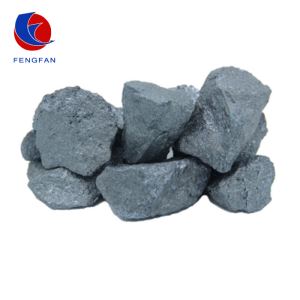
The appearance of silicon metal is usually silver-gray crystalline, with a relatively smooth surface without roughness or bulges caused by oxidation products.
Silicon Metal Uses
Silicon metal has a wide range of uses, mainly in the following aspects:
Semiconductor industry: Metal silicon is an important component of semiconductor materials and is used to manufacture integrated circuits, solar panels, LEDs, and other electronic devices. Its high purity and good electronic properties are widely used in the electronics industry.
Steel smelting: In the metallurgical industry, silicon metal is an important alloy raw material. Adding appropriate amounts to steel can improve its hardness, strength, and wear resistance, and improve its physical and chemical properties.
Casting industry: silicon metal can be used as a casting material to improve the toughness and thermal fatigue resistance of castings and reduce casting defects and deformation.
Solar thermal power generation: Metal silicon is also used in solar thermal power generation. By focusing solar energy on the surface of metal silicon, the light energy is converted into thermal energy, and then the thermal energy is used to generate steam to drive a turbine generator to generate electricity.
Nanomaterial preparation: Through appropriate chemical reactions and processing methods, silicon metal can be converted into nanoparticles, nanowires, or nanofilms.
Silicon Metal Powder
Silicon metal powder is a kind of powdered silicon metal, which has the same composition as bulk silicon metal.
The appearance of silicon metal powder is a silver-gray or dark-gray powder with a metallic luster.
The particle size of silicon metal powder is usually between 10-100 microns. During the processing, due to different production processes and requirements, metal silicon powder of different particle sizes may be produced. Generally speaking, the larger the mesh number, the finer the material particle size; the smaller the mesh number, the larger the material particle size.
Silicon Metal Powder Processing
The particle size processing process of silicon metal powder includes the following steps:
Crushing: Crush the selected ore into particle sizes suitable for further processing.
Screening: Screen the crushed stones to separate particles of different sizes for further crushing and processing. The screening process can use a screening machine to carry out screening and classify particles according to prescribed standards to achieve the expected quality requirements.
Crushing: Particles of different sizes are fed into the crusher for crushing. There are many types of pulverizers to choose from, such as ball mills, Raymond mills, and ring roller mills, each with its advantages and disadvantages. Factors such as processing temperature and humidity need to be strictly controlled during the crushing process to ensure that the powder quality meets the expected requirements.
Drying: To ensure the dryness of the silicon powder, it needs to be dried. The drying process requires controlling parameters such as temperature and time to achieve the appropriate degree of drying.
Packaging: The dried silica powder can be packaged and stored. Packaging materials generally take the form of plastic bags, cardboard boxes, iron drums, etc. During the packaging process, attention must be paid to sealing and moisture-proof measures to ensure product quality.
Silicon Metal Powder Uses
Silicon metal powder is an important industrial raw material and is widely used in refractory materials, the powder metallurgy industry, and other fields.
- In the refractory material industry, silicon metal powder can be used to make advanced refractory materials, such as siliceous refractory bricks, aluminum silicate refractory fibers, etc. These refractory materials have the advantages of high refractoriness, high strength, and high toughness, and are widely used as lining materials for high-temperature industrial kilns such as steel, cement, and nonferrous metals.
- In the powder metallurgy industry: Metal silicon powder can be used to manufacture various high-performance alloy materials. For example, adding silicon metal powder to metals such as iron and nickel can significantly improve the hardness, wear resistance, and corrosion resistance of the alloy. In addition, silicon metal powder can also be used to manufacture various electronic devices, such as integrated circuits, solar panels, etc.
Our Factory
Anyang Fengfan Silicon Industry Co., Ltd. is located in anyang, one of the seven ancient capitals of China, close to beijing-hongkong-macao expressway and nanlin expressway, with convenient traffic conditions, superior natural environment and abundant mineral resources, which provide advantaged conditions for the development of the enterprise. The company's leading products are: cored wire, silica-aluminum-barium calcium deoxidized alloy series,silicon metal, metal silicon powder, ferrosilicon ball, silicon carbon ball and other alloy pressure ball, silicon powder, rare earth ferrosilicon magnesium alloy, spheroidizing agent, etc. The products sell well in many large iron and steel enterprises and foundry enterprises at home and abroad. Anyang metallurgical material production base is one of the main manufacturers.

FAQ
We're well-known as one of the leading alloy powder manufacturers and suppliers in China for 10 years. Our factory offers high quality alloy powder made in China with competitive price. Welcome to place an order.
brazing powder, magnesium alloy powder, inconel 625 powder