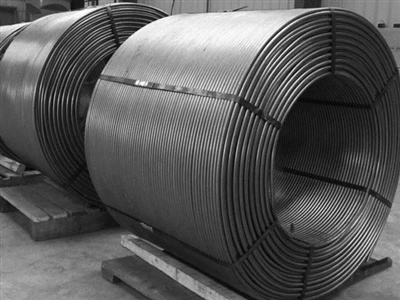
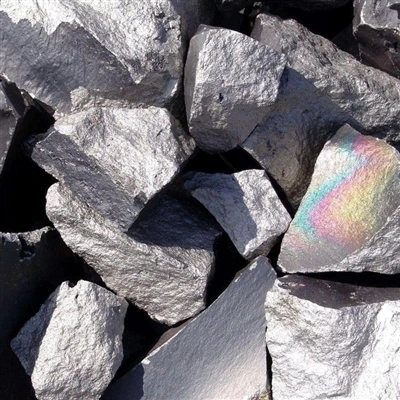
Ferrosilicon is a ferroalloy composed of iron and silicon. Now ferrosilicon has a wide range of applications. Ferrosilicon can also be used as an alloying element additive and is widely used in low-alloy structural steel, spring steel, bearing steel, heat-resistant steel and electrical silicon steel. Ferrosilicon is commonly used as a reducing agent in ferroalloy production and chemical industry. However, many people only understand the use of ferrosilicon and do not understand the smelting of ferrosilicon and the problems that will be found in smelting. In order to deepen our understanding of ferrosilicon, ferrosilicon suppliers simply analyze the reasons for the low carbon content in ferrosilicon.
The main reason why the carbon content of ferrosilicon smelted is low is that when smelting ferrosilicon, the manufacturer will use coke as reducing agent to make the self baking electrode easy to increase carbon, use coke brick to build iron outlet and flow iron tank, sometimes coat ingot mold with graphite powder, and use carbon sample spoon to take liquid sample, etc. In short, there are obviously many opportunities to contact with carbon in the process of smelting ferrosilicon from reaction in the furnace to tapping. The higher the silicon content in ferrosilicon, the lower the carbon content. When the silicon content in ferrosilicon is more than 30%, most of the carbon in ferrosilicon exists in the state of silicon carbide (SIC). Silicon carbide is easily oxidized and reduced by silicon dioxide or silicon oxide in the crucible. Silicon carbide in ferrosilicon, especially when the temperature is low, its solubility is very small, easy to precipitate and float up. Therefore, the silicon carbide left in ferrosilicon is very low, so the carbon content of ferrosilicon is very low.