How silicon metal is classified
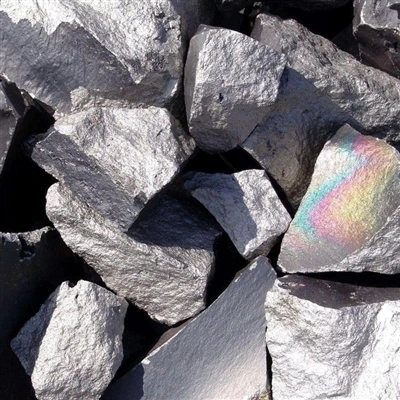
"Silicon metal" (also known as industrial silicon in China) is a trade name that emerged in the mid-1960s. Its emergence was associated with the rise of the semiconductor industry. The common international practice is to divide commercial silicon into silicon metal and silicon for semiconductors. Silicon metal is a product made from quartz and coke smelted in an electrically heated furnace, with the content of the main component silicon at about 98% (99.99% Si is also included in silicon metal), and the remaining impurities are iron, aluminum, calcium, etc. Semiconductor silicon is used to make high purity silicon metal for semiconductor devices. It is sold in polycrystalline and monocrystalline forms, with the former being inexpensive and the latter expensive. It is divided into various specifications depending on its use. According to statistics, the world consumed about 500,000 tons of silicon metal in 1985, of which about 60% was used for aluminum alloys, less than 30% was used for organic silicon, about 3% was used for semiconductors, and the rest was used for steel smelting and precision ceramics, etc.
The classification of silicon metal is usually based on the content of the three main impurities of iron, aluminum and calcium contained in the silicon metal composition. According to the content of iron, aluminum and calcium in silicon metal, silicon metal can be classified into different grades such as 553, 441, 411, 421, 3303, 3305, 2202, 2502, 1501 and 1101.
Industrially, silicon metal is usually produced by reducing silicon dioxide from carbon in an electric furnace. The chemical reaction equation: SiO2 + 2C → Si + 2CO The silicon thus produced is 97-98% pure and is called silicon metal. It is then melted and recrystallized, and impurities are removed with acid to obtain silicon metal with a purity of 99.7~99.8%.
Silicon metal is composed mainly of silicon, so it has similar properties to silicon. There are two isomers of silicon, amorphous silicon and crystalline silicon. Amorphous silicon is a grayish-black powder and is actually a microcrystal. Crystalline silicon has the crystal structure and semiconductor properties of diamond, with a melting point of 1410°C, a boiling point of 2355°C, a Mohs hardness of 7, and a brittle nature. Amorphous silicon is chemically active and can burn violently in oxygen. It reacts with halogens, nitrogen, carbon and other non-metals at high temperatures, and can also interact with magnesium, calcium, iron and other metals to produce silicides. Amorphous silicon is insoluble in almost all inorganic and organic acids, including hydrofluoric acid, but can dissolve in a mixture of nitric acid and hydrofluoric acid. Concentrated sodium hydroxide solution can dissolve amorphous silicon and release hydrogen gas. Crystalline silicon is relatively inactive and does not chemically combine with oxygen even at high temperatures. It is also insoluble in any kind of inorganic and organic acids, but is soluble in a mixture of nitric acid and hydrofluoric acid as well as in concentrated sodium hydroxide solutions.