The usage of silicon calcium powder in practical application
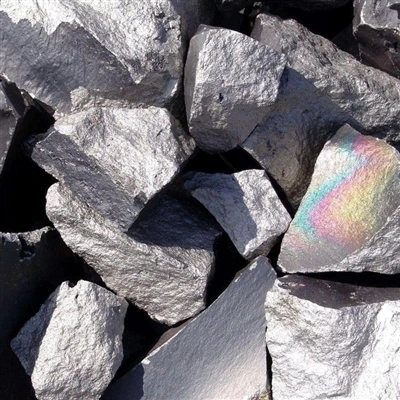
Calcium silicon powder is a powder of calcium silicon powder, it has the same effect with calcium silicon powder in some places, but because its shape is powder, so the name is calcium silicon powder. In iron and steel production and processing industry, silicon calcium powder is often used as a compound deoxidizer and desulfurizer.
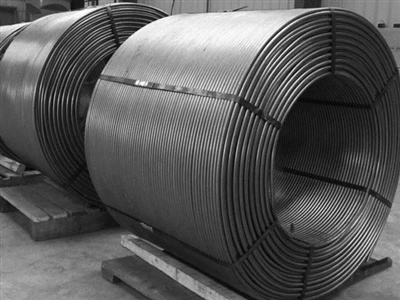
Due to the strong affinity between calcium and the oxygen, sulfur, hydrogen, nitrogen and carbon in the molten steel, the silicon calcium powder is mainly used for deoxidizing, degassing and fixing sulfur in the molten steel. A strong exothermic effect is produced when silicon and calcium are added to molten steel. Calcium turns into calcium vapor in molten steel, which has stirring effect on molten steel and is favorable to the floating of non-metallic inclusions. After deoxygenation, the non-metallic inclusions with larger particles are produced, which are easy to float, and the shape and properties of the non-metallic inclusions are also changed. Therefore, silicon calcium powder is used to produce clean steel, steel with low oxygen and sulfur content, as well as special performance steel with low oxygen and sulfur content. Add calcium silicon powder can reduce using aluminum as final deoxidizer steel in the ladle nozzle nodules, and continuous cast steel | ironmaking of tundish nozzle clogging. In the out-of-furnace refining technology of steel, silicon calcium powder or core wire is used to deoxidize and desulphurize, so that the content of oxygen and sulfur in steel is reduced to a very low level. It can also control the form of sulfide in steel and improve the utilization rate of calcium. In the production of cast iron, silicon calcium powder plays an inoculation role in addition to deoxygenation and purification, and helps to form fine or spherical graphite. The distribution of graphite in gray cast iron is uniform, and the tendency of white casting is reduced. And can increase silicon, desulfurization, improve the quality of cast iron.
But at high temperature, lime and silica firstly form calcium silicate slag with low melting point, which makes carbon reduction difficult to proceed. Calcium has a low boiling point and is volatile enough to produce calcium vapour. And SiO2 is reduced to SiO(gas), so the gas discharged from the furnace is CO, Ca(gas) and SiO(gas). The loss of calcium and silicon in furnace gas is about 10% each. When SiO(gas) and Ca(gas) pass through the material layer, they react with carbon, and most of them are converted into CaC2 and SiC, so the reactivity of the carbonaceous reducer is very important for smelting silicon calcium powder. Calcium oxide and silica with carbon at high temperature to form CaC2 and SiC, is the production of silicon calcium powder intermediate products. Some of them remain in the slag, so the production of silicon calcium powder is smelted by slag method. In fact, the method of industrial production of calcium silicate powder is realized with CaC2 as the transition product. The density of silicon and calcium powder is slightly lower than that of slag, and the silicon and calcium alloy is basically concentrated in the upper part of molten pool during smelting, which is the characteristic of smelting silicon and calcium powder. Special measures must be taken to separate it from the slag when it is released. According to the above analysis, there are three smelting processes by electrocarbothermal (reduction) method, that is, mixed feeding method, layered feeding method and calcium carbide method. Electrothermal silicon (reduction) method is also one of the methods to produce calcium silicon powder.
Both calcium and silicon have a strong affinity for oxygen. Calcium, in particular, has a strong affinity with oxygen, and with sulfur, nitrogen have a strong affinity. So silicon calcium powder is a more ideal compound oxycolic agent, desulfurizer. The deoxidizing product of silicon alloy is easy to float and discharge, and it can also improve the properties of steel, improve the plasticity, impact toughness and fluidity of steel. At present, silicon calcium powder can replace aluminum for final deoxidization. Used in the production of steel, special steel and special alloy. For example, rail steel, low carbon steel, stainless steel and nickel-based alloy, titanium based alloy and other special alloys, can be used as deoxidizer silicon calcium powder. Silica-calcium powder is also suitable for heating agent used in converter smelting workshop. Silica-calcium powder can also be used as inoculant of cast iron and additive in ductile cast iron production.