The production principle of silicon manganese alloy
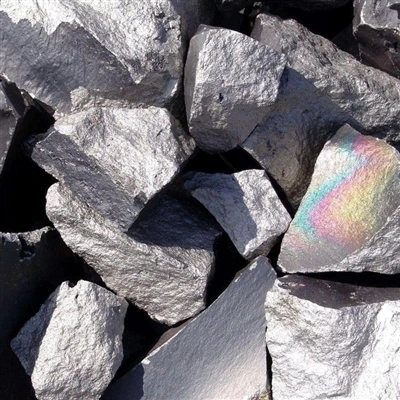
silicon manganese is an alloy composed of manganese, silicon, iron and a small amount of carbon and other elements. It is a kind of ferroalloy with wide application and large output. silicon manganese is a compound deoxidizer commonly used in steelmaking, and it is also a reducing agent in the production of low carbon ferromanganese and manganese metal produced by electrosilicon thermal process
In electric furnace smelting Si-Mn alloy, the Fe and P in the charge are reduced first, and the high-value oxides of Mn are decomposed in the upper layer or reduced to low-value oxides of MnO by CO. The low-value oxides of MnO then react with C to form carbides. The equation can be written
MnO+(1+x)C→MnCx+CO
With the sinking of the charge into the high temperature zone, the reaction of C reduction of SiO2 begins to occur
SiO2+2C=Si+2CO
The reduced Si then reacts with the formed MnCx to form Si-Mn alloy, and promotes the reduction of Si. The equation is
SiO2+2C+MnCx=Mn·Si·Cx+2CO
The more Si is generated, the more thoroughly the carbide is destroyed and the lower the carbon content of the alloy is. When the silicon content of the alloy is less than 23.5% (e.g., SiMn 10, SiMn 14, SiMn 17 and SiMn 20), the reaction of silicon destroying carbides can be written
(Mn,Fe)7C3+7Si=7(Mn ·Fe)Si+3C
If the silicon content is high, the reaction of destroying carbide can be written
(Mn,Fe)7C3+10Si=7(Mn·Fe)Si+3SiC
If you need to purchase silicon manganese or know more about silicon manganese, please contact us, we are silicon manganese manufacturer.