The effect of silicon
Silicon occurs in nature in large quantities as silicate and quartz. If carbon is the main element that makes up the living world, silicon is the main element that makes up the earth's mineral world.
The abundance of silicon in the earth's crust is 27.7%, ranking second among all elements. The most abundant element in the earth's crust is silicon dioxide SiO2 formed by the combination of oxygen and silicon, accounting for 87% of the total mass of the earth's crust.
The earth, the stone and the sand under our feet, the bricks, tiles, cement, glass and ceramics that we use, these are all compounds of silicon that we encounter in our daily lives. Silicon is a ubiquitous, ubiquitous element.
The difference between monocrystalline silicon and polycrystalline silicon is that when the molten monocrystalline silicon solidifies, the silicon atoms are arranged into many crystal nuclei in the diamond lattice. If these crystals grow into grains with the same orientation on the crystal surface, monocrystalline silicon is formed. If these nuclei grow into grains with different orientations, polysilicon is formed.
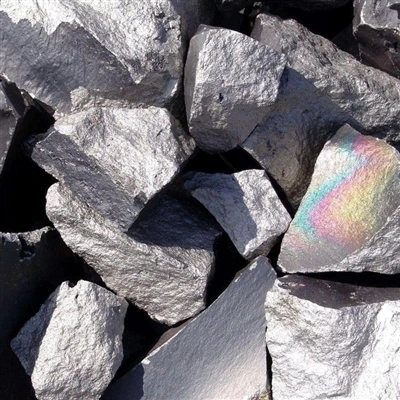
Silicon has crystalline and amorphous allotropes. Crystalline silicon is also divided into monocrystalline silicon and polycrystalline silicon, which all have diamond lattice, hard and brittle crystal, with metallic luster, can conduct electricity, but the conductivity is less than metal, and increases with the increase of temperature, with semiconductor properties. Crystalline silicon has a melting point of 1410C and a boiling point of 2355C. Dense amorphous silicon is a black-gray powder.