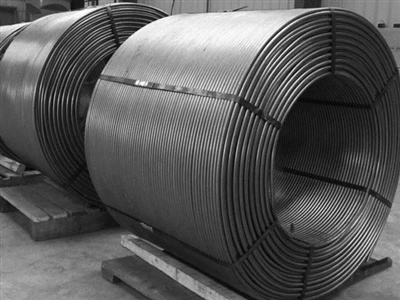
Cored wire technology casting application
The use of cored wire technology in casting is mainly through the path of ladle metallurgy to achieve the following.
1. refining to obtain clean steel with low levels of both oxygen and sulfur.
2. performing calcium addition to change the characteristics of inclusions
3. add alloying elements to precisely adjust the chemical composition of the steel.
(1) Enhanced final deoxidation
Feeding line method to strengthen the final deoxidation process of the steel, is after the steel, with the ladle fed into the aluminum line method instead of other aluminum hunting, so as to achieve the dissolved oxygen in the steel into alumina, and make the steel residual aluminum content stable in a certain order of magnitude at the same time, significantly reduce the amount of aluminum added. In general, the amount of aluminum is 0.20-0.40kg/t, and the yield is 90%-100%.
(2) Calcium addition treatment
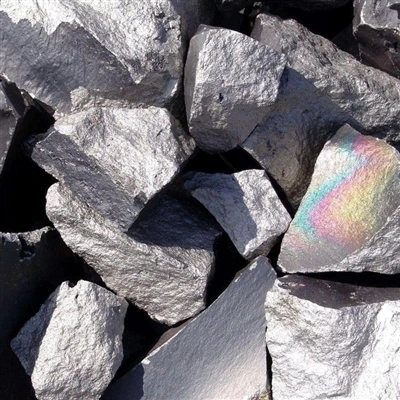
The main task is to use the cored wire technology to add calcium to the steel (mostly in the form of CaSi alloy), so that the alumina in the steel and aluminum deoxidation of the formation of silica aluminate, into a liquid state of calcium aluminate at the pouring temperature, so as to reduce its number, change its shape, reduce its size, and ultimately to purify the steel, improve the performance of steel (non-directional, toughness, machinability, and hydrogen-induced cracking resistance, etc.) The purpose of this process is to purify the steel and improve its properties (anisotropy, toughness, machinability, and hydrogen-induced cracking resistance). Depending on the type of steel, 0.15-0.5kg of calcium is generally fed into each ton of steel.
(3) Alloy composition
When feeding other alloying elements into the steel with cored wire, especially when it is difficult to add normally or add unstable, because it can be added directly to the depth of the steel without contact with air and slag, and make it under higher pressure, as well as a larger contact area and time with the steel, therefore, not only add high efficiency, good stability of results, and can accurately control the amount of elements added, close to the analytical error Therefore, it can meet the strict technical requirements of use and better specify and control the heat treatment parameters of the subsequent manufacturing process.