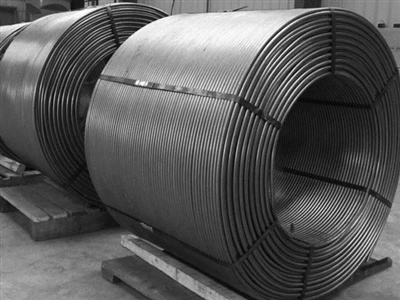
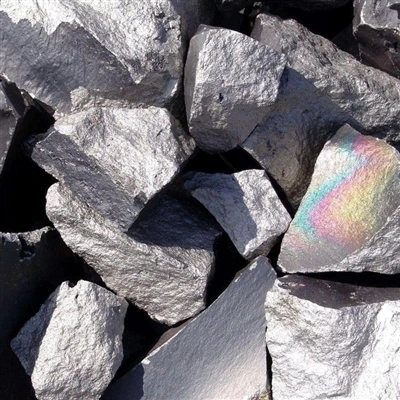
Casting with inoculant type and action?
Ingestant is a kind of can promote graphitization, reduce the tendency of white mouth, improve the morphology and distribution of graphite, increase the number of eutectic group, refine the collective structure, it has a good effect in a short time after inoculation treatment.
At present, there are many inoculants used to treat gray cast iron, but 75 ferrosilicon is widely used. In recent years, the demand for thin-walled castings is increasing day by day, and the requirements for inoculation treatment are more strict. In the case of low carbon equivalent of cast iron, the white tendency of thin-walled castings can be better controlled by using inoculants containing strontium, barium, bismuth, zirconium or some rare earth elements. There are also reports that inoculants containing barium, bismuth and rare earth elements can slow down the decline of inoculation. In addition, the application of carbonaceous inoculants has been increasing recently. As for the selection of inoculants, although a lot of research work has been done, it is not enough to form a universally applicable criterion. The foundry should consider the characteristics of its own products, verify the process with reference to the experience of other units, and then select the inoculant suitable for its own products according to the test results. There are several inoculants used in foundry production.
1. ferrosilicon
75 ferrosilicon is the inoculant commonly used by Chinese government, in which the content of aluminum and calcium plays an important role in inoculation effect. It has been pointed out in literature that ferrosilicon without aluminum and calcium has little or no effect on inoculation effect of gray cast iron. In molten iron, aluminum and calcium are thought to react with oxygen and nitrogen to form high-melting compounds that form the core of graphite crystals. Moreover, after inoculant is added, local silicon rich microareas can be formed in the molten iron, which is conducive to graphite precipitation. When purchasing ferrosilicon for inoculation, the content of aluminum and calcium cannot be taken into account. As for FeSi75 as inoculant, there are 75 ferrosilicon grades with different aluminum content in the national standard GB/T 2272-1987. The upper limit of aluminum content is 0.5%, 1.0%, 1.5% and 2.0% respectively, and the upper limit of calcium content is 1.0%. However, the aluminum content in liquid iron should not be too high, adding 0.01% aluminum may cause the casting to develop subcutaneous pores. The selection of inoculant varieties and the determination of inoculant dosage should also be considered.
2. Silicontium inoculant
Siliconstrontium inoculant has an obvious effect on the elimination of white holes in castings, which is especially beneficial to improve the morphology and distribution of graphite in thin-walled castings, so that the difference of microstructure at different thicknesses is smaller, and the undercooled microstructure can only be found in the surface layer of castings. Strontium is the most effective promoter of inoculation in ferrosilicon inoculants. When the degree of undercooling is larger strontium has the special effect of reducing the number of eutectic groups can reduce the shrinkage cavity and porosity defects of the casting. Siliconstrontium inoculant is a strong ink inoculant. Its ink ability is significantly better than that of ferrosilicon. Compared with the calcium inoculant, the ink capacity is similar, but it has a low melting point, good solubility, low calcium content, less line slag, allowing a lower inoculation temperature. Compared with ferrosilicon and barium ferrosilicon, its outstanding feature is that it does not significantly increase the number of eutectic groups while reducing the whiteness, so it can reduce the shrinkage and porosity tendency, improve the casting densification and water pressure resistance.
Silicone strontium inoculant is suitable for thin wall or cold high sulfur, low sulfur gray iron parts, with strong ink ability. It can also be used in ductile iron to increase the number of ductile iron, especially high nickel corrosion resistant ductile iron (containing Ni 14%,Cu 6%,Cr 2%,Si 1.5%). In addition, because it reduces the white mouth and does not obviously increase the number of eutectic groups, it is especially suitable for the requirements of compact castings, no loose, water pressure resistant gray cast iron, the effect is good, and different from the carbon silicon calcium strong ink inoculant, can allow the temperature of molten iron is low, at the same time the calcium, aluminum content is low, less slag, castings without pinhole defects. For gray cast iron, it is about 0.1-0.3%, and alloy cast iron can be increased appropriately. The allowable range of inoculation temperature is 1360-1460℃, which is generally 1400-1460℃ The inoculant should be added to the metal flow flowing into the ladle. Do not add the inoculant on the surface of the molten iron or put it low in the ladle. The particle size and attention phase of the inoculant should be the same as that of ferro silicon. The fine particles of silontium inoculant can be inoculated with flow during pouring.
At present, the domestic production of silicon-strontium inoculation agents has been relatively common, in which the contents of strontium are 0.6 ~ 1.0% and 1.0 ~ 2.0%. Generally, the varieties containing 0.6-1.0% strontium can be selected. If the strontium content is too high, it can not fully play its role. Siliconstrontium inoculants are generally used for fluid-induced inoculation during production.
3. Silica-barium inoculant
Si-barium inoculant also has a strong ability to promote graphitization, improve the morphology and distribution of graphite in thin-walled castings, and slow down the decline of inoculation. It has been reported that adding too much barium will increase the ferrite content in the matrix, resulting in a decrease in the strength of cast iron. At present, the content of barium silicate inoculants produced in China is generally 4 ~ 6%. Foreign research report says that ferrosilicon containing bismuth also has similar effect with ferrosilicon containing barium.
4. Silico-zirconium inoculants
Zirconium can deoxidize, improve the fluidity of molten iron, reduce the white tendency of cast iron, and promote uniform and fine A-type graphite. And it has the effect of slowing down the recession that is breeding it. However, there are few casting manufacturers using silicon zirconium inoculant in China.
5. Rare earth inoculant
The inoculants containing rare earth metals, such as rare earth mixed metals and rare earth ferrosilicate, have strong inoculation effect when adding appropriate amount, and their effect can be several times that of 75 ferrosilicate, which can effectively eliminate the white mouth and slow down the decline of inoculation effect. If the addition amount is too high, it may lead to supercooling and cementite structure of cast iron during crystallization. When using, the dosage must be strictly controlled.
6. Carbonaceous inoculants
Carbonaceous inoculants are mainly used for the pretreatment of molten iron before inoculation, and are generally carbonaceous materials in the crystalline form. There are research reports that: for gray cast iron, with 85 ~ 90% of the metallurgical silicon carbide ************, crystalline graphite is also effective. The amount of pretreatment is generally 0.75 ~ 1.0%, and the value of ****** should be obtained according to the test results.
Third, summary
As an alloy which can promote graphitization, reduce the tendency of whitening and improve the morphology and distribution of graphite, inoculant plays a vital role in the process of cast iron production. The production unit should select the appropriate inoculant according to its product material and wall thickness. While ensuring product quality, it can also ****** limit to save production costs.