Introduction
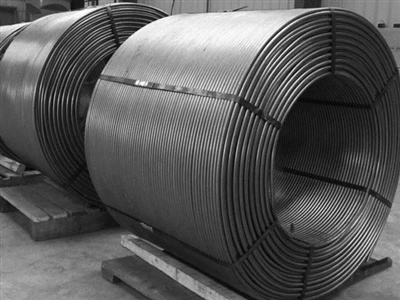
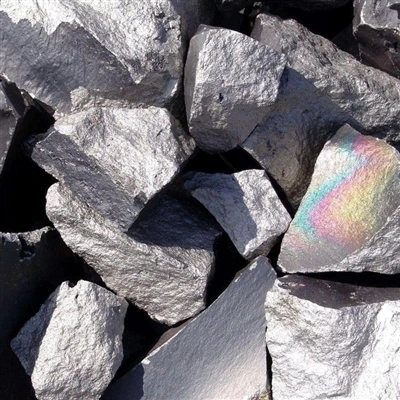
A binary alloy consisting of silicon and calcium, belonging to the category of ferroalloys. Its main components are silicon and calcium, and it also contains various amounts of impurities such as iron, aluminum, carbon, sulfur and phosphorus. Iron and steel industry used as calcium additive, deoxidizer, desulfurizer and nonmetallic inclusion denaturant. Cast iron industry used as inoculant and denaturant.
Purpose
Due to the strong affinity of calcium and oxygen, sulfur, hydrogen, nitrogen and carbon in molten steel, silicon calcium alloy is mainly used for deoxygenation, degassing and fixation of sulfur in molten steel. The addition of calcium silicon to molten steel produces strong heat release effect. Calcium becomes calcium vapor in molten steel, which has a stirring effect on molten steel and is beneficial to the floating of non-metallic inclusions. After deoxidation of Ca-Si alloy, non-metallic inclusions with large particles and easy to float are produced, and the shape and properties of non-metallic inclusions are changed. Therefore, silicon calcium alloy is used in the production of clean steel, high quality steel with low oxygen and sulfur content, and special performance steel with low oxygen and sulfur content. Add the calcium silicon alloy can eliminate as final deoxidizer in aluminum steel in the ladle nozzle nodules, and continuous cast steel | ironmaking of tundish nozzle clogging and so on. In the steel refining technology, the silicon calcium powder or core wire is used to deoxidize and desulfurize, so that the content of oxygen and sulfur in the steel is very low; It can also control the form of sulfide in steel and improve the utilization rate of calcium. In the production of cast iron, in addition to deoxidation and purification, silica-calcium alloy also plays a role in the inoculation, which helps to form fine grain or spherical graphite. Make the graphite distribution in gray cast iron uniform, reduce the tendency of white mouth; And can increase silicon, desulfurization, improve the quality of cast iron.
Process of production
The operation of the mixed feeding method is similar to the operation of the small electric furnace to produce 75% ferrosilicon, but the silicon calcium alloy charge is not all mixed into the furnace, but some are in the form of partial feeding. 1/4-1/3 of the silica is added around the electrode alone after the collapse of the material, and the wood blocks are added separately. The rest of the silica and lime, coke, bituminous coal mixed into the furnace.
Layered feeding method Layered feeding method is the lime and the corresponding amount of coke (according to the formation of low grade calcium carbide required coke) mixed after concentration added to the furnace, after the purification, silica and the remaining reducing agent mixed before adding. The operation process of the layered feeding method can be divided into three stages: the first stage is the temperature raising stage. After the iron is removed, the temperature in the furnace decreases, so the temperature must be raised. Its operation is: after the iron put electrode, ramming furnace, take out the hard block, finishing material surface, striking air permeability, strengthen material surface maintenance, to full load, deep insertion electrode, this stage is generally 1 hour and 20 minutes. The second phase is the CaC2 generation phase. When the temperature in the furnace rises, clean the floating material around the electrode, pick out the sticky material, quickly mix the added lime and the corresponding reducing agent, and add all of them directly to the orange vortex around the electrode. In order to accelerate the generation of CaC2, we should try to give full load and try to cover material early. The duration of this phase is typically 30-40 minutes, not too short or too long. The time is too short, the generation of CaC2 is insufficient, and a large amount of CaO not involved in the reaction occurs salt reaction with SiO2 added later. Too long, calcium element volatilization and heat energy loss increased, alloy Ca content decreased, unit power consumption increased.
The third stage is to destroy CaC2 with silica to generate CaSi alloy stage. When CaC2 is generated, the mixture is added, and the SiO2 in the mixture is used to destroy CaC2 and generate CaSi alloy. After adding the material, carry on the jiong burning, until out of the oven.
The operation of the third stage should be uniform feeding, carefully maintain the furnace condition, increase the air permeability of the material surface, ensure that the electrode is deeply and stably inserted into the charge, and prevent the collapse of the material from firing, so as to reduce the Ca volatilization and heat energy loss. The smelting time at this stage is generally 2.5-3 hours.
The duration of this phase should not be too long or too short. If the alloy is too long, the Ca volatilization and heat energy loss increase, and the Ca content is low, the unit power consumption increases. Too short, a large amount of CaC2 and SiO2 are not fully reacted, the amount of slag increases, the calcium in the alloy is low, and the amount of calcium silicon generated is small.
Iron and alloy casting, normal conditions every 4-5 hours out of the furnace. When discharging iron, open the outlet with round steel or burners, and the molten iron and slag flow into the tundish at the same time. Because the density of slag is greater than the density of alloy, the alloy must be composed in the slag separator for 2 to 4 minutes. After the alloy is completely floating, the alloy is slowly poured into the ingot mold. When the surface of the alloy is found to be white and shiny, stop casting immediately to avoid slag inclusion. After alloy condensation, demoulding, finishing storage.
Two step method
Firstly, CaC2 was prepared from high-quality lime with CaO > 85% and carbonaceous reducing agent in an electric furnace, and then the cooled CaC2 was broken, and then added with silica and carbonaceous reducing agent to produce calcium silicon alloy in another electric furnace. The equipment conditions and operation methods required for the two-step production of calcium silicon alloy are basically the same as that for ferrosilicon production. Although this method can achieve a longer furnace life and higher product grade rate, but it needs two electric furnaces, high comprehensive power consumption, high operation requirements, difficult to control the process, strict requirements for moisture in the raw material, so only in the high degree of automation, good management conditions, mechanical feeding, sealed silo on the electric furnace.