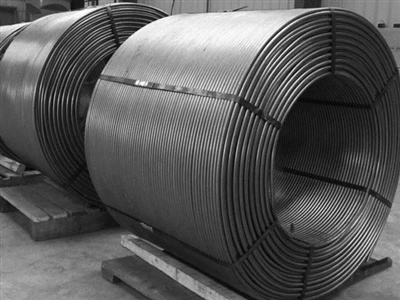
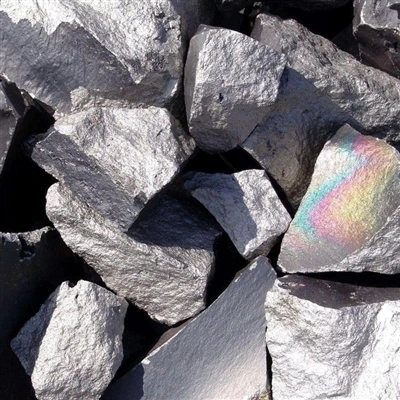
Ferrosilicon is an alloy of iron and silicon. Ferrosilicon is an iron silicon alloy made from coke, steel chips and quartz (or silica) by electric furnace smelting. Because silicon and oxygen are easy to synthesize silicon dioxide, Ferrosilicon is often used as deoxidizer in steelmaking. At the same time, due to the large amount of heat released during the formation of SiO2, it is also beneficial to improve the temperature of molten steel while deoxidizing. At the same time, ferrosilicon can also be used as an alloying element additive, which is widely used in low-alloy structural steel, spring steel, bearing steel, heat-resistant steel and electrical silicon steel. Ferrosilicon is commonly used as a reducing agent in ferroalloy production and chemical industry.
(1)Composition of ferrosilicon
Ferrosilicon is a ferroalloy composed of iron and silicon. Steelmaking is used as deoxidizer and alloying agent. Used as deoxidizer and denaturant in cast iron. Beneficiation industry is used as weighting agent, welding rod is used as coating, and ferroalloy industry is used as reducing agent. Ferrosilicon varieties are divided according to silicon content, such as fesi90 (containing 87% ~ 95% Si), fesi75 (containing 72% ~ 80% Si), fesi65 (containing 63% ~ 68%), fesi45 (containing 40% ~ 47% Si), fesil5 (containing 14% ~ 20% Si), etc. Impurities Al, CA, s, P, C, Mn, Cr, etc. are otherwise specified according to different purposes. There are many kinds of composite alloys based on ferrosilicon. The important one is magnesium ferrosilicon, which is used as spheroidizing agent in the production of nodular cast iron; Aluminum silicon iron, used as deoxidizer in steelmaking, etc.
(2)Application of ferrosilicon
The chemical affinity between silicon and oxygen is great, so ferrosilicon is used as deoxidizer (precipitation deoxidation and diffusion deoxidation) in steelmaking industry. Except for boiling steel and semi killed steel, the silicon content in steel shall not be less than 0.10%. Silicon does not form carbides in steel, but exists in ferrite and austenite as a solid solution. Silicon has a strong effect on improving the strength of solid solution and cold working deformation hardening rate in steel, but reduces the toughness and plasticity of steel; The effect on the hardenability of steel is medium, but it can improve the tempering stability and oxidation resistance of steel. Therefore, ferrosilicon is used as alloying agent in steelmaking industry. Silicon also has the characteristics of high specific resistance, poor thermal conductivity and strong magnetic conductivity. Steel contains a certain amount of silicon, which can improve the permeability of steel, reduce hysteresis loss and eddy current loss. Electrical steel contains 2% ~ 3% Si, but the content of titanium and boron is required to be low. The addition of silicon to cast iron can prevent the formation of carbide and promote the precipitation and spheroidization of graphite. Silicon magnesium iron is a commonly used spheroidizing agent. Ferrosilicon containing barium, zirconium, strontium, bismuth, manganese and rare earth is used as inoculant in cast iron production. High silicon ferrosilicon is a reducing agent for producing low-carbon ferroalloy in ferroalloy industry. Ferrosilicon powder containing about 15% silicon (particle size < 0.2mm) is used as weight increasing agent in heavy medium beneficiation.
(3)Ferrosilicon production process
The production equipment of ferrosilicon is submerged arc reduction electric furnace. The silicon content of ferrosilicon is controlled by the dosage of iron raw materials. In addition to pure silica and reducing agent, the production of high-purity ferrosilicon should also be refined outside the furnace to reduce the impurities such as aluminum, calcium and carbon in the alloy. See Figure 4 for ferrosilicon production process flow. Ferrosilicon containing Si ≤ 65% can be smelted in a closed electric furnace. Ferrosilicon with Si ≥ 70% shall be smelted in open electric furnace or semi closed electric furnace.