

Anyang Fengfan Silicon Industry Co., Ltd., founded in 2010 on December 10, formerly anyang city yu macro metallurgy refractories co., LTD., founded in 1999 on June 12, has been more than 30 years of history.
Why choose us?
Rich Experience
Providing technical support, troubleshooting, and maintenance services.
Production Market
The products are exported to domestic countries such as sichuan panzhihua iron and steel, shandong laigang yongfeng iron and steel, hebei jingye group, and foreign countries such as South Korea, Japan, Russia, Iran and so on.
Our Service
We will patiently introduce our company's products to customers, including product specifications, functions, performance, etc.
One-stop Solution
We will patiently answer all kinds of problems encountered by customers during the journey, as well as solve problems encountered by customers in the later period of use .
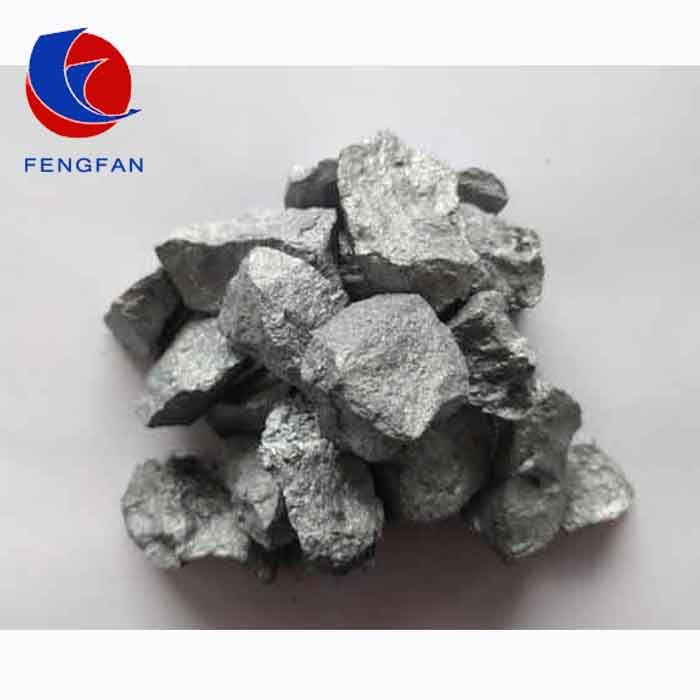
What Is Ferro Silicon Magnesium Used For?
Ferro Silicon Magnesium Alloys are master alloys of Magnesium with Iron and Silicon. They facilitate small additions of Magnesium to Iron, required to transform graphite flakes to spheroids.
Ferro silicon magnesium, often abbreviated as FeSiMg, is an alloy primarily used in the production of nodular or ductile iron. It is added to molten iron to promote the formation of graphite nodules, which impart superior mechanical properties to the iron. Here are some key uses and benefits of ferro silicon magnesium:
Nodular Iron Production: FeSiMg is a crucial additive in the production of nodular or ductile iron, which is characterized by its enhanced ductility, toughness, and strength. The alloy contains a high percentage of magnesium (typically 4-6%) along with silicon and iron. When added to the molten iron, FeSiMg reacts with sulfur and oxygen impurities, resulting in the formation of magnesium oxide (MgO) and magnesium sulfide (MgS). These byproducts create favorable conditions for the formation of graphite nodules during solidification, preventing the formation of brittle flakes or lamellar graphite. The nodules in ductile iron improve its mechanical properties and make it more suitable for applications requiring high strength and ductility, such as automotive components, pipes, and machinery parts.
Improved Mechanical Properties: The addition of FeSiMg to iron helps control the microstructure and properties of the resulting alloy. The graphite nodules formed through the nodularization process provide ductility, reducing the brittleness associated with traditional gray iron. The nodules act as stress concentrators, preventing the propagation of cracks and enhancing the overall toughness and impact resistance of the material.
Heat and Wear Resistance: Nodular iron produced with FeSiMg exhibits good thermal conductivity and resistance to thermal fatigue. These properties make it suitable for applications involving high temperatures, such as engine components, exhaust manifolds, and industrial machinery. Additionally, nodular iron has good wear resistance, making it suitable for parts subjected to abrasion or sliding contact, like gears, camshafts, and rollers.
Machinability: Nodular iron produced with FeSiMg has improved machinability compared to other iron alloys. The graphite nodules act as internal lubricants during machining operations, reducing tool wear and improving surface finish.
Cost Efficiency: FeSiMg is a cost-effective alloy, as it provides the desired nodularization effect while using relatively smaller amounts of magnesium compared to other alloys. This contributes to its widespread use in the production of ductile iron.
Let's go To the world of Ferro Silicon Magnesium
How the ferro silicon magnesium is produced?
The production of rare earth magnesium ferrosilicon alloy is carried out in submerged arc furnace, which consumes a lot of electricity. It can also be produced in medium frequency furnace. In the process of cast iron, the additive added to the molten iron to make graphite precipitate in a spherical shape is called spheroidizing agent. The spheroidizing agent containing rare earth elements is called rare earth spheroidizing agent.
Where the ferro silicon magnesium is used?
The ferro silicon magnesium is a common additive used in the steelmaking industry and iron casting.
In iron steel making, it is added as the nodularizer, the vermiculizer, and the inoculant. With strong mechanical strength, it works well in deoxidation and desulfurization.
It can also be used as alloy agent for refining, deoxidation, denaturation and neutralization of harmful impurities (Pb, arsenic, etc.) with a lower melting point. By solid solution alloying, the ferro silicon magnesium can help to form new metal compounds with the impurities, to purify the steel.
Ferro silicon magnesium composition
FerroSilicon Magnesium, often abbreviated as FeSiMg, is a ferroalloy containing iron (Fe), silicon (Si), and magnesium (Mg) as its primary constituents. The precise composition may vary, but a common formulation includes approximately 40% to 60% silicon, 4% to 15% magnesium, and the remaining balance being iron and other elements. This unique combination of elements imparts exceptional qualities to the alloy, making it highly sought after in metallurgical applications.
Ferro Silicon Magnesium Properties
The addition of ferrosilicon magnesium helps improve the mechanical and metallurgical properties of cast iron. Here are some key properties and characteristics of ferrosilicon magnesium:
Inoculation Agent: FeSiMg is primarily used as an inoculant in the production of cast iron to promote the formation of graphite nodules. This results in the production of ductile iron with enhanced mechanical properties.
Nodularizing Effect: The magnesium content in FeSiMg is crucial for its nodularizing effect. It facilitates the formation of graphite nodules, improving the ductility and toughness of the cast iron.
Enhanced Mechanical Properties: The addition of ferrosilicon magnesium contributes to increased tensile strength, elongation, and impact resistance in cast iron.
Reduced Shrinkage: FeSiMg helps in reducing the shrinkage tendency of cast iron during solidification, minimizing the risk of casting defects.
Controlled Cooling: The alloy allows for controlled solidification and cooling of the cast iron, resulting in a more uniform microstructure.
FerroSilicon Magnesium Applications in Steelmaking
Ferro Silicon Magnesium has emerged in the steelmaking industry, contributing significantly to producing high-quality steel. Its effectiveness in desulfurization and deoxidation processes makes it an ideal additive for steel foundries aiming to achieve superior steel grades.
In steelmaking, the alloy's ability to react with sulfur and oxygen is harnessed to minimize impurities, ensuring the final steel product meets stringent quality standards. The addition of Ferro Silicon Magnesium promotes cleaner and more efficient steel production, enhancing the mechanical properties and overall performance of the steel.
Moreover, as we mentioned before the alloy's role as a nodularizer in the production of ductile iron is paramount. It facilitates the formation of spheroidal graphite structures within the iron, improving its mechanical properties and making it more ductile and malleable.
Ferro Silicon Magnesium Alloy: A Perfect Nodulizer in Casting
Ferro Silicon Magnesium (FeSiMg) alloy stands as a remarkable innovation in the realm of metallurgy, offering unique properties that make it a sought-after material in various industries. This alloy contains of ferro silicon, and magnesium, and its distinctive characteristics make it an indispensable component in the manufacturing processes of steel and iron.
Properties and Composition:
The primary components of Ferro Silicon Magnesium are iron, silicon, and magnesium. Equally important, the magnesium content typically ranging from 3% to 8%. This alloy is famous for its excellent nodularizing ability, enhancing the microstructure of cast iron and steel. The addition of magnesium results in improved castability, machinability, and mechanical properties, making it a preferred choice for many applications.
Applications of FeSiMg Alloy:
Foundry Industry: Ferro Silicon Magnesium is widely using in the foundry industry for the production of ductile iron. Meanwhile, its nodularizing properties contribute to the creation of nodular graphite structures in cast iron, enhancing its strength and ductility.
Steel Manufacturing: The alloy is an essential additive in the production of steel. Because it aids in controlling the shape and distribution of graphite flakes. This, in turn, improves the toughness and strength of the final steel product.
Automotive Sector: Given its ability to enhance the mechanical properties of cast iron, for instance, Ferro Silicon Magnesium finds extensive use in the automotive industry. What's more, it is employed in the production of engine blocks, cylinder heads, and other critical components.
Benefits:
The key benefits of Ferro Silicon Magnesium include:
Improved Castability: The alloy enhances the fluidity of molten metal, allowing for intricate and precise casting. In addition, enhanced Mechanical Properties: It contributes to increased strength, ductility, and toughness of the final product.
Reduced Shrinkage: The nodularizing properties of FeSiMg minimize shrinkage defects, ensuring a higher quality end product.
Conclusion: Ferro Silicon Magnesium Alloy is a versatile material with a wide range of applications, particularly in the foundry and steel industries. Its unique composition and properties make it an indispensable element in the manufacturing processes. It also contributing to the production of high-quality, durable, and efficient metal products. As industries continue to evolve, the demand for Ferro Silicon Magnesium is expected to grow, solidifying its status as a crucial component in the world of metallurgy.
Ductile iron is a high-strength cast iron material developed in the 1950s. Before the molten iron is cast, a certain amount of nodularizing agent (rare earth magnesium alloy) and a small amount of inoculant (ferrosilicon or calcium silicon alloy) are added. After solidification, cast iron with spheroidal graphite is obtained. The so-called "replacing steel with iron" mainly refers to cast iron.
Ferro-silicon magnesium nodularizers and inoculants are important materials in the spheroidizing process. In addition to stable quality, the following factors need to be considered when selecting a suitable Ferro silicon magnesium nodularizer.
Spheroidization treatment temperature: If the spheroidization treatment temperature is >1480°C, the spheroidization reaction will be more violent, resulting in a lower magnesium absorption rate. To make the spheroidization reaction stable, you can choose a spheroidizer with a relatively high calcium content. If the spheroidizing temperature is <1480°C, a Ferro silicon magnesium nodularizer with a relatively low calcium content can be used.
Treatment bag size: If the height-to-diameter ratio of the treatment bag is 1:1, the magnesium absorption rate will decrease due to the loss of magnesium vapor. It is recommended to use a Ferro silicon magnesium nodularizer with a higher calcium content. If the height-to-diameter ratio of the treatment package is 2:1, the spheroidization reaction will be relatively smooth, magnesium vapor will diffuse into the molten iron, and the magnesium absorption rate will be improved.
Spheroidization process: If the cover method is not used, the smoke generated by the spheroidization reaction will enter the atmosphere and produce dazzling white light. To make the spheroidization reaction stable, a Ferro silicon magnesium nodularizer with low magnesium and high calcium can be used. If the lidded bag method is used, the molten iron will not splash and generate less smoke. A high magnesium and low calcium Ferro silicon magnesium nodularizer can be used to reduce the addition amount and reduce the spheroidizing cost.
Processing weight: If the weight of the molten iron to be processed is less than 500kg, a Ferro silicon magnesium nodularizer with a smaller particle size can be used. It is recommended to use a Ferro silicon magnesium nodularizer with a particle size of less than 12mm. If the weight of the molten iron to be processed is 500~1000kg, a Ferro silicon magnesium nodularizer with a larger particle size can be used, such as a Ferro silicon magnesium nodularizer with a particle size of 3~25mm. If the weight of the molten iron to be processed is greater than 1000kg, a 4~32mm Ferro silicon magnesium nodularizer can be used.
Silicon content: If the process yield rate of cast products is low or the scrap rate is high, you want to add more recycled materials and scrap steel for smelting. Castings have strict requirements on the silicon content of molten iron. Under the premise that the inoculation amount cannot be further reduced, low silicon Ferro silicon magnesium nodularizer can be used for treatment, which can increase the recycled material by 8% to 15% and reduce the production costs of the foundry.
Sulfur content of the original liquid iron: If the sulfur content of the original liquid iron is high, if desulfurization is not carried out, a high magnesium and high rare earth nodulizing agent will be needed, and the addition amount will be higher. If the sulfur content of the original liquid iron is low, then Low magnesium and low rare earth Ferro silicon magnesium nodularizers can be used, and the addition amount will be lower. The cost of low magnesium and low rare earth Ferro silicon magnesium nodularizers will also be cheaper.
Our Factory
Anyang Fengfan Silicon Industry Co., Ltd. is located in anyang, one of the seven ancient capitals of China, close to beijing-hongkong-macao expressway and nanlin expressway, with convenient traffic conditions, superior natural environment and abundant mineral resources, which provide advantaged conditions for the development of the enterprise. The company's leading products are: cored wire, silica-aluminum-barium calcium deoxidized alloy series,silicon metal, metal silicon powder, ferrosilicon ball, silicon carbon ball and other alloy pressure ball, silicon powder, rare earth ferrosilicon magnesium alloy, spheroidizing agent, etc. The products sell well in many large iron and steel enterprises and foundry enterprises at home and abroad. Anyang metallurgical material production base is one of the main manufacturers.

FAQ
Hot Tags: Ferro Silicon Magnesium For Casting, China Ferro Silicon Magnesium For Casting manufacturers, suppliers, factory, Ferro Silicon Magnesium, ferrosilicon magnesium


